
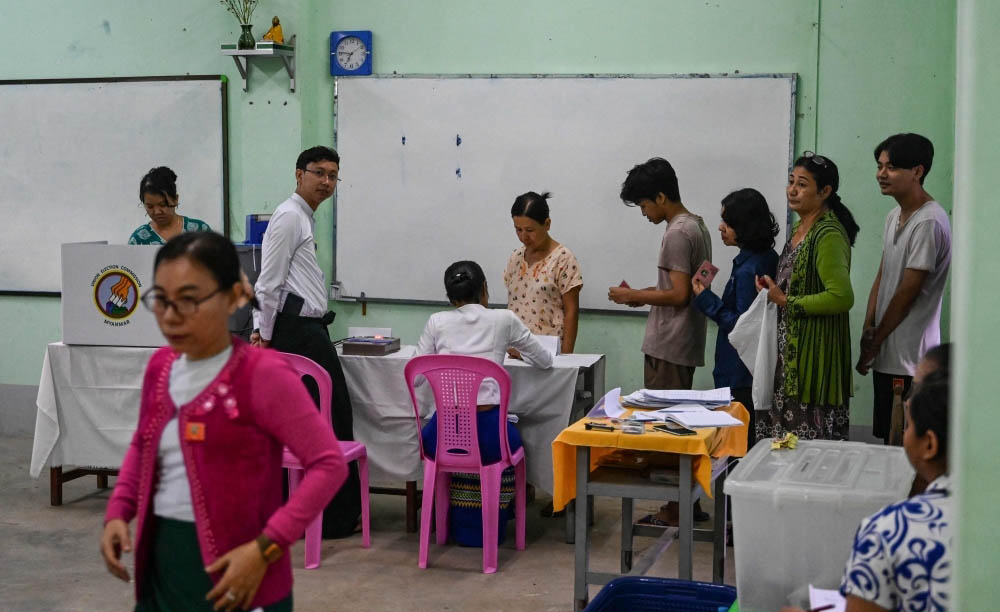
Voting is currently underway in Myanmar for the third and final phase of the national general election. This month-long electoral process, which began in late December 2025, is widely seen as a strategic move by the military junta to solidify its grip on power.
With the pro-military Union Solidarity and Development Party (USDP) securing a dominant lead in the first two phases and 25% of parliamentary seats already reserved for the military under the constitution, a junta-led government is virtually guaranteed. Senior General Min Aung Hlaing is expected to be named the next president when the new parliament convenes in March.
The international community remains deeply divided over the legitimacy of the polls. While western nations and the United Nations have labeled the election a “sham,” citing the imprisonment of Nobel laureate Aung San Suu Kyi and the forced dissolution of her party (NLD), other regional powers including China, Russia, India, and Japan have sent observers.
Within Southeast Asia, the response is fractured; Malaysia and other ASEAN members have refused to recognize the results, calling the process non-inclusive. Conversely, countries like Vietnam and Cambodia participated by sending monitors, reflecting a complex regional tug-of-war over Myanmar’s future.
On the ground, the election has been marred by extreme violence and logistical failures. Ongoing civil war has made voting impossible in approximately one-fifth of the country’s townships, particularly in rebel-held territories. Armed opposition groups have reportedly targeted polling stations and government buildings, leading to several fatalities.
Despite these challenges, the junta plans to announce the final results by the end of this week, aiming to transition from a state of emergency to a military-backed civilian government by April 2026.





FACEBOOK COMMENTS