
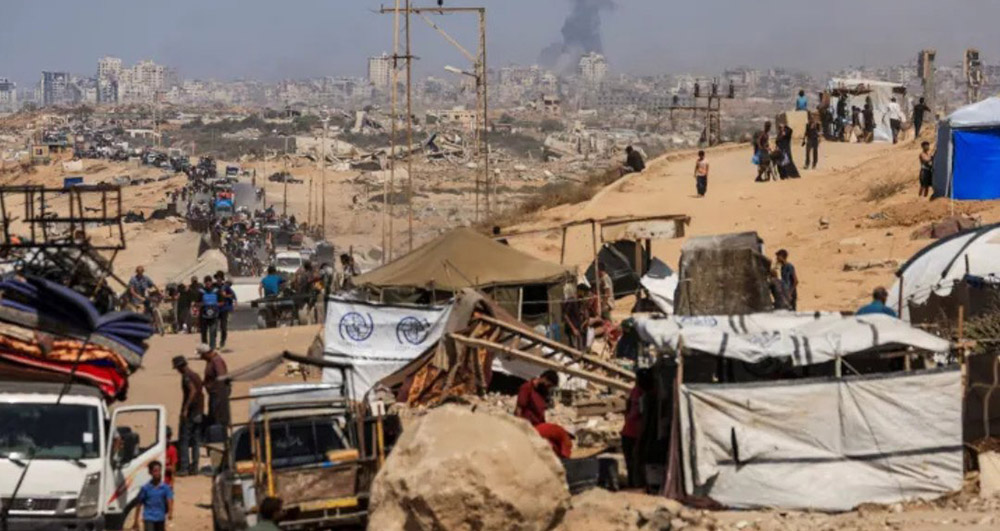
Following the ceasefire brokered by the United States in October, Hamas has reportedly strengthened its grip over Gaza. A recent report claims that the militant group has reasserted control over more than 90% of the region it governs. In the aftermath of the ceasefire, Hamas has deployed police and security forces to the streets, targeting both those it views as allies and adversaries, while also cracking down on crime.
As this unfolds, the first meeting of the “Peace Board,” an initiative proposed by U.S. President Donald Trump, is set to take place in Washington on Thursday. Around 60 countries have been invited to attend, and a report on a peace plan for Gaza is expected to be presented. However, reports from Israeli media suggest that the initial documents for the board do not directly address Gaza. Trump has clarified that the board’s mission is not confined to Gaza but aims at establishing peace on a global scale.
Some European countries, however, have chosen to stay away, dismissing the board as Trump’s personal project. The board’s bylaws make it clear that Trump will serve as president, with the position potentially lasting for life, even beyond his presidency. This gives Trump veto power over most decisions, including the ability to add or remove members, shape the agenda, and establish or dissolve various subcommittees. Even after his term as president ends, he will remain in charge of the board.
Despite some nations’ reluctance, several global leaders have confirmed their participation. Among those attending will be Argentina’s President Javier Milei, Hungary’s Prime Minister Viktor Orbán, and Belarus’s President Alexander Lukashenko, though Lukashenko will send his foreign minister in his place. Pakistan’s Prime Minister is also expected to attend. In contrast, Israeli Prime Minister Benjamin Netanyahu has opted out, with Israel sending its Foreign Minister instead. New Zealand’s Foreign Minister Winston Peters has declined, emphasizing that actions should align with the principles of the United Nations Charter. Many European nations have similarly expressed reservations about the initiative.
Trump has pledged that participating countries will collectively contribute more than $5 billion in humanitarian aid and reconstruction efforts for Gaza. According to the bylaws, permanent members of the Peace Board must commit to an initial contribution of $1 billion in cash in the first year. In addition, a proposal for an international stabilization force has been suggested. This force, which would deploy thousands of personnel to Gaza, would be tasked with border security, disarming militant groups, and protecting civilians until at least 2027. Indonesia has already pledged to send approximately 2,000 troops as part of the initiative.
However, Hamas remains adamant about not disarming unless Israel fully withdraws its military forces from Gaza. A Hamas leader recently reiterated that no decision has been made regarding disarmament. On the other hand, Israel has made it clear that its forces will not pull out until Hamas disarms completely. The Israeli Defense Forces have reported that attacks on Israeli soldiers have continued, with four soldiers killed even after the ceasefire. Meanwhile, Gaza’s Ministry of Health has reported that 603 Palestinians have died since the ceasefire came into effect.
In addition to these military and humanitarian efforts, there have been proposals for ambitious reconstruction projects in Gaza, including the creation of a new city and the development of a tourism industry along the Gaza coastline. However, the specifics of these plans—including funding and timelines—remain unclear. Experts warn that the situation in Gaza has become even more complicated following the ceasefire, and it remains uncertain whether any of these plans will come to fruition.










FACEBOOK COMMENTS