
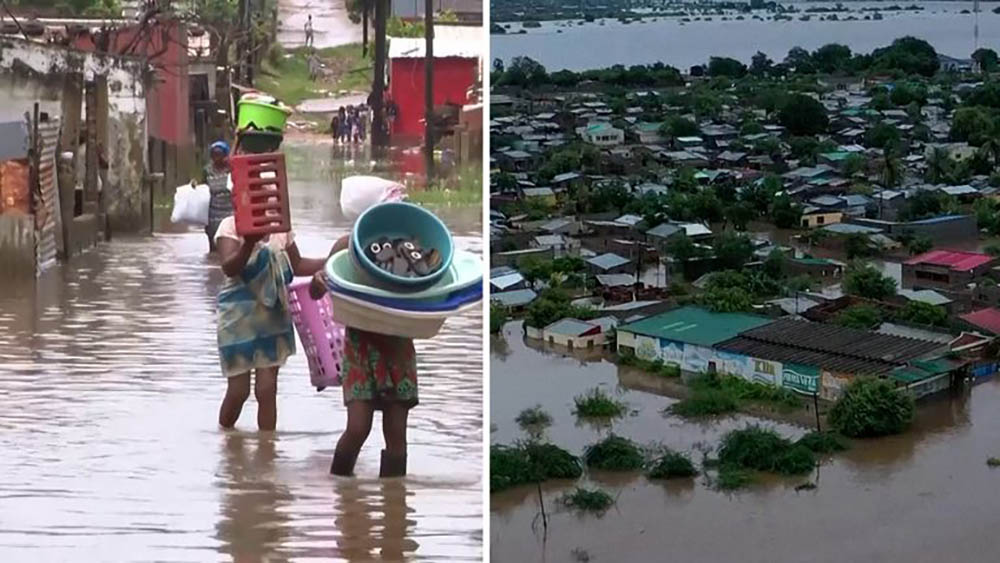
The escalating impact of human-induced climate change has triggered catastrophic flooding across several parts of Africa, claiming over 100 lives and displacing nearly 300,000 people. According to a report released by global weather experts on Thursday, South Africa, Mozambique, and Zimbabwe were hit by unprecedented rainfall that saw an entire year’s worth of precipitation fall in just ten days.
The resulting floods have devastated infrastructure, washing away roads, bridges, and homes, with total damages estimated in the millions of dollars. In Mozambique, entire buildings were submerged, while South Africa’s Limpopo and Mpumalanga provinces faced severe logistical collapses as key transport links were destroyed.
Climate researchers highlight that while the current La Niña weather system naturally brings more rain to the region, its effects have been violently amplified by a warming atmosphere. Izidine Pinto, a climate researcher at the Royal Netherlands Meteorological Institute and co-author of the study, noted a 40% increase in rainfall intensity that simply cannot be explained without climate change.
He emphasized that continued reliance on fossil fuels is turning what used to be manageable heavy rains into “once-in-50-years” catastrophic events that local populations are not equipped to handle.
The geographical vulnerability of the region has further worsened the crisis. Bernardino Nantumbo, a researcher from the Mozambique Meteorological Service, explained that certain areas received a full season’s worth of rain in just two to three days. Since Mozambique sits at the basin of nine international rivers, the combination of local downpours and strong upstream river flows created a “perfect storm” of destruction. Cities like Xai-Xai and Chokwe remained underwater for extended periods, and authorities admitted that despite having forecasts, the sheer volume of water made it impossible to prevent the scale of the disaster.
Experts are now calling for a radical shift in how the continent monitors climate risks. Professor Friederike Otto of Imperial College London pointed out that most global climate models are developed in the US, Europe, and Asia, leading to a critical lack of independent models tailored to Africa. This gap makes it difficult to accurately assess and predict regional impacts. Scientists warn that without immediate global action to address climate change and the development of localized modeling tools, these deadly floods will become increasingly frequent and severe across Southern Africa.


FACEBOOK COMMENTS