
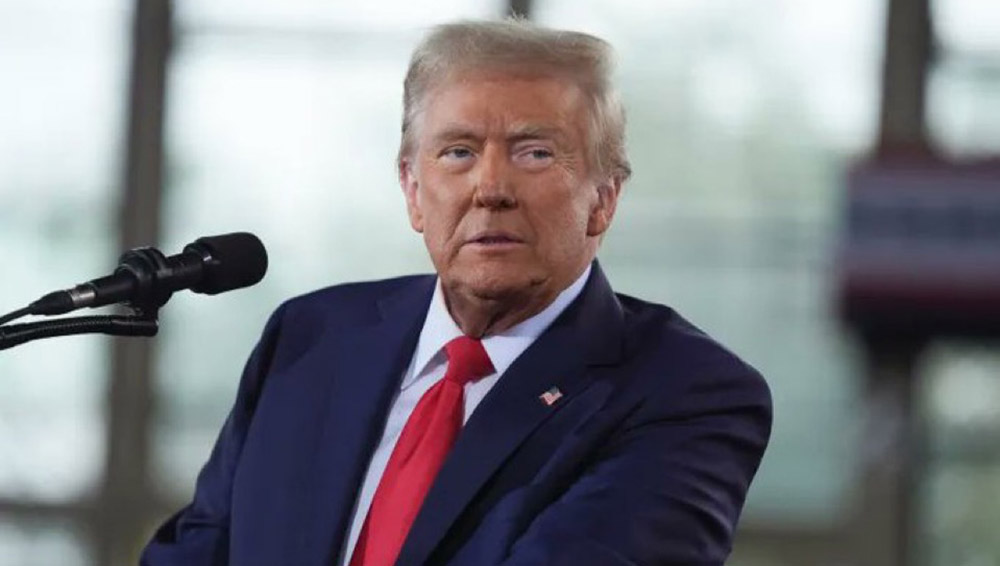
U.S. President Donald Trump has issued a stark warning to Iran, stating that the country faces a total crisis of existence if it fails to reach an agreement soon.
Speaking to reporters aboard Air Force One on Sunday, March 29, 2026, Trump expressed cautious optimism that a deal could be reached quickly, noting that negotiations are moving in a positive direction. However, he emphasized that if Tehran rejects the current proposal, the country could cease to exist as it is known today, suggesting that its “map could be erased” if it does not abandon its nuclear ambitions.
The President revealed that the United States is considering several aggressive military options, including the potential seizure of Kharg Island, Iran’s primary oil export hub in the Persian Gulf. Since Kharg Island handles approximately 90% of Iran’s crude exports, U.S. officials believe that taking control of the terminal would cripple the Iranian military’s financial foundation and force an end to the conflict.
While Trump noted that the U.S. could take the island “very easily” due to weak defenses, he clarified that a final decision has not yet been made, as such a move would require a sustained American military presence.
In what Trump described as a “sign of respect” and a “tribute” during ongoing negotiations, he claimed that Iran has authorized 20 large oil tankers to pass through the strategic Strait of Hormuz. These vessels, reportedly flying Pakistani flags, were scheduled to begin their transit on Monday.
Trump attributed this gesture to Mohammad Bagher Ghalibaf, the Speaker of the Iranian Parliament, framing it as evidence that the Iranian leadership—which he described as a “new group of people” following recent internal upheavals—is becoming more “reasonable” and is serious about making a deal.
The framework for peace rests on a 15-point proposal delivered to Tehran via Pakistani intermediaries. According to Trump, Iran has already agreed to the majority of these demands, which reportedly include a one-month ceasefire, strict limits on missile programs, and the handover of nuclear materials.
Despite these claims of progress, Iranian Foreign Minister Abbas Araghchi has expressed skepticism regarding the American stance. While acknowledging that indirect talks are occurring, Iranian officials have previously dismissed the idea of an immediate surrender, insisting that any deal must respect their sovereign interests even as the U.S. maintains its April 6 deadline for a final resolution.





FACEBOOK COMMENTS