
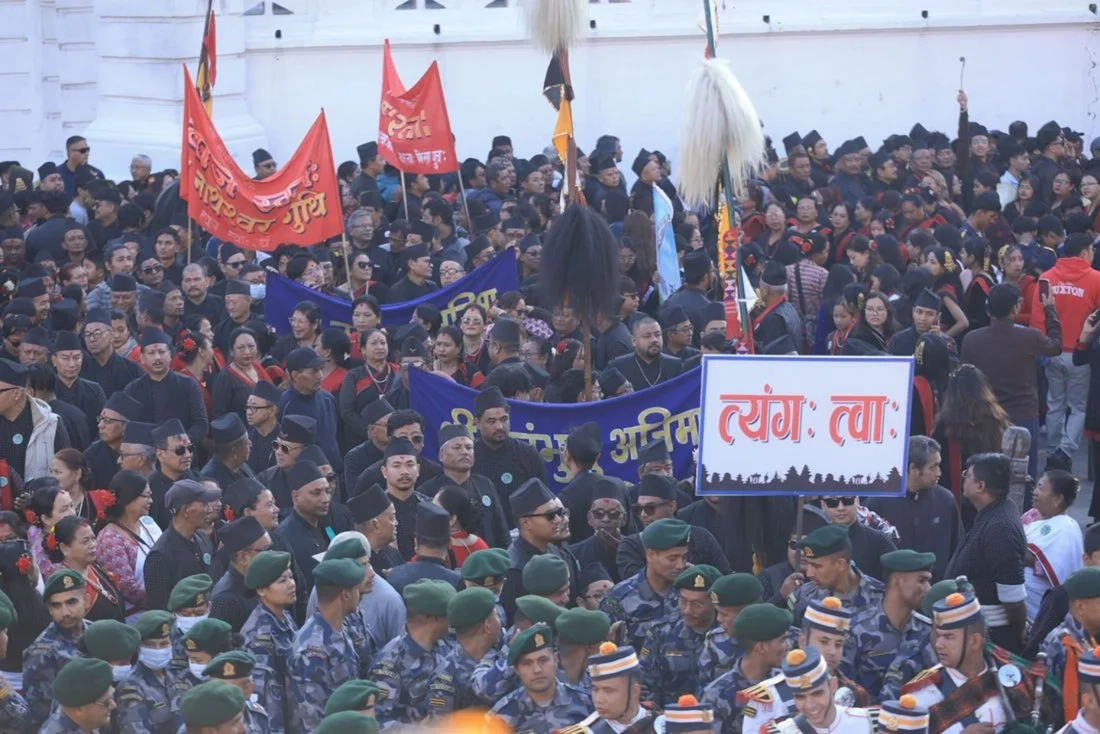
Kathmandu – Nepal Sambat 1147 has officially begun today.
The Newar community is celebrating the first day of the New Year according to the Nepal Sambat calendar by exchanging “Nhu Daya Bhintuna” (New Year) greetings. National luminary Shankhadhar Sakhwa initiated Nepal Sambat in 880 AD (937 BS) by liberating poor citizens from their debts.
Nepal Sambat received recognition as a national calendar until the reign of King Prithvi Narayan Shah. Initiated during the reign of Licchavi King Raghavadeva, this indigenous calendar remained in practice until the Shah dynasty.
Prior to the Licchavi period, the Saka calendar was in use, but Nepal Sambat is considered a unique indigenous calendar as it is named after the country itself. Campaigns for the official national recognition of Nepal Sambat have been active ever since the establishment of democracy in 2007 BS (1950 AD).
The New Year of Nepal Sambat is specially celebrated in areas with a high concentration of the Newar community, including Kathmandu, Lalitpur, Bhaktapur, Banepa, Dhulikhel, Barhabise, and Dolakha Bhimeshwar.
In high appreciation of his exemplary social service in clearing the debts of poor citizens and establishing an indigenous calendar in Nepal, then-Prime Minister Krishna Prasad Bhattarai declared Sakhwa a national luminary on New Year’s Day in 2056 BS (2000 AD). Later, in 2065 BS (2008 AD), Prime Minister Pushpa Kamal Dahal announced official national recognition for Nepal Sambat.
In Kathmandu, the tradition of closing old ledger accounts on Kartik Krishna Amavasya and opening new ledger accounts on the New Year day of Kartik Shukla Pratipada still persists. Currently, the government has also initiated the practice of mentioning Nepal Sambat alongside other calendars in official government documents.








FACEBOOK COMMENTS