
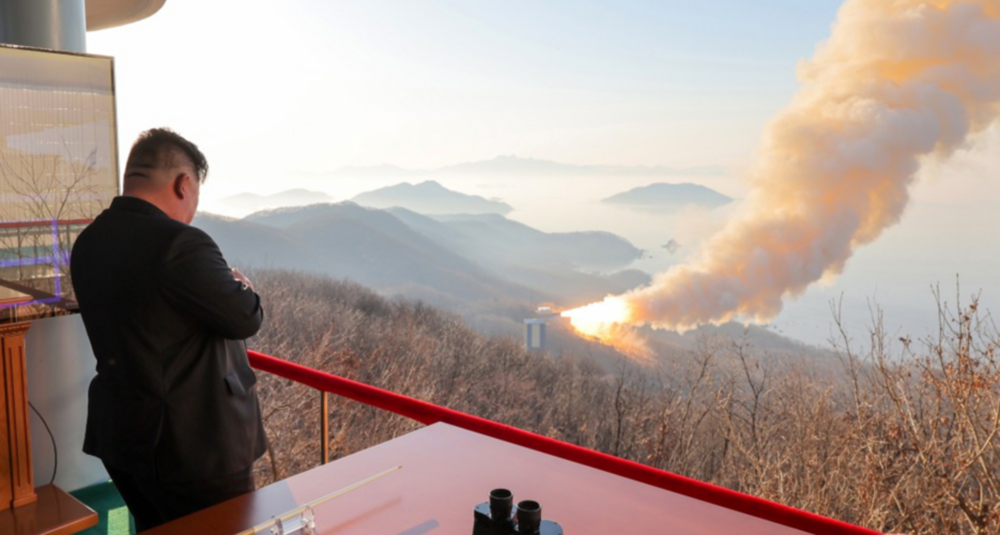
North Korean leader Kim Jong Un recently supervised a ground test of a high-power, solid-fuel missile engine designed to enhance the country’s strategic military capabilities.
According to state media reports on Sunday, this new engine is constructed from advanced carbon fiber and boasts a significantly increased thrust of 2,500 kilonewtons, a substantial jump from the 1,970 kilonewtons recorded during a previous test in September. This development is part of a broader five-year weapons modernization plan aimed at building intercontinental ballistic missiles (ICBMs) that are harder to detect and intercept compared to older liquid-fuel models. Kim Jong Un hailed the test as a “significant step” in elevating the nation’s strategic military power to its highest level yet.
Despite the celebratory tone from Pyongyang, international experts and South Korean researchers remain cautious, suggesting that the North may be exaggerating its technological leaps. Analysts like Lee Chun-geun noted that critical data, such as the duration of the engine’s burn, were omitted from official reports.
There are also growing suspicions among the global intelligence community that North Korea’s rapid progress may be bolstered by technical assistance from Russia. This follows reports of deepening ties between the two nations, including North Korea allegedly sending troops and munitions to assist Russia in its ongoing conflict in Ukraine.
The shift toward solid-fuel technology is particularly concerning for regional security, as these engines allow for smaller, more mobile missiles that can be launched quickly from submarines or mobile vehicles.
Since the breakdown of diplomatic talks with Donald Trump in 2019, Kim has focused relentlessly on expanding his nuclear arsenal, refusing to accept any denuclearization terms while maintaining that his weapons are a necessary deterrent against the United States and its allies.


FACEBOOK COMMENTS