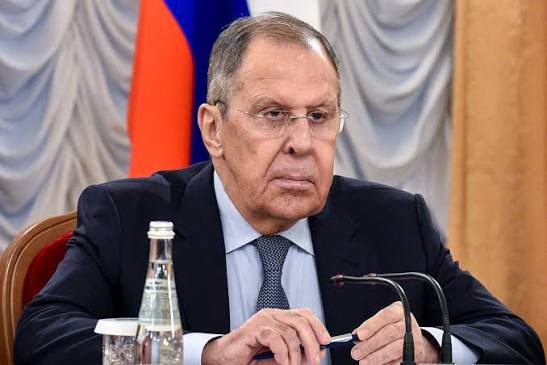
LONDON : Russian Foreign Minister Sergey Lavrov has questioned the future of the United Kingdom, pointing to growing calls for independence referendums in Scotland, Wales and Ireland.
Speaking at a youth conference in Russia, Lavrov said he did not know what would become of the country called Great Britain. He also argued that Britain’s influence had declined significantly since it became a permanent member of the United Nations Security Council in 1945.
Lavrov’s remarks come amid renewed discussions over the constitutional future of the UK. The leaders of Scotland, Wales and Northern Ireland recently met and signed a joint agreement arguing that the nations have the right to determine their own futures through democratic means.
The agreement said the political landscape across the UK was changing and called on the British government to prepare for and facilitate constitutional change where it is supported democratically.
Scotland’s First Minister John Swinney and Northern Ireland’s First Minister Michelle O’Neill have backed calls for referendums on the constitutional future of their respective nations. Wales’ First Minister Rhun ap Iorwerth has also expressed support for Welsh independence but has not set a timetable for a referendum.
Lavrov referred to Wales, Ireland and Scotland collectively as “the Celts” and said they were seeking referendums. He made the comments while discussing the composition of the UN Security Council and Britain’s continuing position as one of its five permanent members.
However, his comments have drawn a cautious response from Welsh independence supporters.
Plaid Cymru said Wales’ constitutional future should be decided by the people of Wales and should not be endorsed, opposed or exploited by the Russian government.
The party also reiterated its support for the democratic right of nations to determine their constitutional future, while describing Russia as a serious threat to modern democracy.
The issue has gained renewed attention following Plaid Cymru’s strong performance in the Welsh Senedd election in May. The result means the largest party in each of Wales, Scotland and Northern Ireland’s devolved legislatures now supports some form of independence from the United Kingdom.
Despite the growing political debate, there is currently no referendum timetable for Welsh independence, while the constitutional question in Scotland and Northern Ireland remains subject to political and legal processes within the UK.
Lavrov’s comments also come as Russia continues to challenge what it sees as Western dominance in international institutions, including the UN Security Council. Russia, the United States, China, France and the United Kingdom are the council’s five permanent members.
The latest remarks have therefore placed the UK’s internal constitutional debate alongside a broader dispute over Britain’s international role and its position in the post-imperial global order.











FACEBOOK COMMENTS