
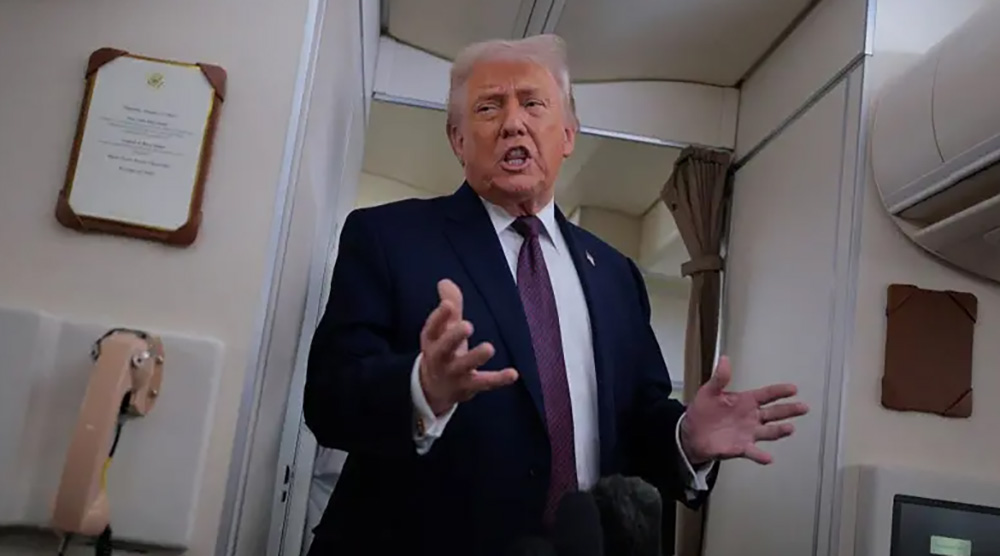
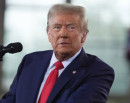
U.S. President Donald Trump has announced that member states of his newly formed “Board of Peace” have pledged more than $5 billion toward the humanitarian and reconstruction efforts in war-torn Gaza. Along with the financial aid, the President stated that thousands of international personnel would be deployed to a stabilization force to maintain security and support local governance in the region.
The formal announcement of these pledges is set to take place this Thursday, February 19, 2026, during the Board’s inaugural meeting at the recently renamed Donald J. Trump U.S. Institute of Peace in Washington, D.C. Trump has touted the body as potentially “the most consequential international body in history,” though specific details on which member states are providing the funds or troops remain partly under wraps.
In a significant move, Indonesia has emerged as the first country to offer a firm military commitment. Indonesian officials indicated on Sunday that they are preparing to deploy up to 8,000 soldiers by the end of June for a peacekeeping and humanitarian mission. As the world’s most populous Muslim-majority nation, Indonesia’s involvement is seen as a move to provide “legitimate and acceptable” mediation in the region, despite the lack of direct Palestinian representation on the Board.
The $5 billion pledge, while substantial, represents only a fraction of what is actually needed. According to estimates from the United Nations, World Bank, and European Union, the total cost to rebuild Gaza after more than two years of intense conflict stands at approximately $70 billion. Over 80% of the enclave’s infrastructure has been damaged or destroyed, leaving a recovery task of unprecedented proportions.
The ceasefire agreement, brokered by the U.S. in October, mandates the total disarmament of Hamas—a key Israeli demand. However, the Board of Peace itself has faced criticism. Some analysts view it as a “pay-to-play” alternative to the United Nations, noting that permanent membership reportedly requires a $1 billion contribution. While Middle Eastern powers like Egypt, Qatar, and Saudi Arabia are involved, many Western allies have remained cautious, fearing the Board aims to sideline established international institutions.
Despite the October ceasefire, the situation remains volatile. Israeli forces continue to conduct periodic airstrikes, and reports of skirmishes near military-controlled zones persist. While Prime Minister Benjamin Netanyahu signed Israel’s accession to the Board during a recent visit to Washington, he is not expected to attend Thursday’s summit personally; instead, Foreign Minister Gideon Sa’ar will represent the Israeli delegation.






FACEBOOK COMMENTS