
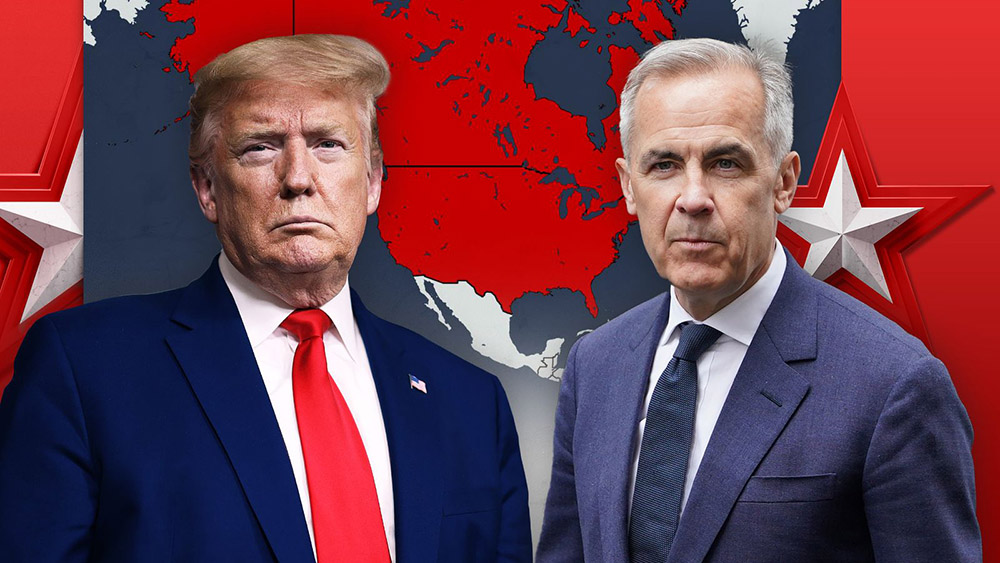
Relations between the United States and Canada have taken a sharp downturn following a series of diplomatic and economic clashes. U.S. President Donald Trump has issued a stern warning to Canada, threatening to impose a 100% tariff on Canadian goods if the country continues to expand its trade ties with China. Trump specifically cautioned Canada against becoming a “drop-off port” for Chinese goods intended for the U.S. market, claiming that such a move would destroy Canada’s businesses and social fabric.
Tensions are further escalated by Canadian Prime Minister Mark Carney’s opposition to Trump’s “Golden Dome” missile project, a stance that has reportedly drawn significant ire from the White House.
In response to these threats, Prime Minister Mark Carney issued a video message urging Canadians to support the local economy by purchasing domestic products. This shift in policy comes as a surprise to many, given that just a year ago, Carney had labeled China as Canada’s “greatest security threat.”
However, following a recent diplomatic visit to China from January 13 to 17, Carney signed several major trade agreements, including a controversial decision to slash tariffs on Chinese electric vehicles (EVs) from 100% down to 6.1%. In exchange, China has agreed to reduce retaliatory taxes on Canadian agricultural products, which previously stood as high as 84%.
This burgeoning trade war threatens one of the world’s most integrated economic partnerships. Currently, the U.S. and Canada share a trade volume exceeding $2 billion per day, with deep ties in the automotive, energy, and agricultural sectors. Under the framework established by the 1989 Free Trade Agreement and the subsequent USMCA (2020), many supply chains are intertwined, such as car parts moving across the border multiple times before a vehicle is completed.
If Trump follows through on his tariff threats, it could disrupt these vital industries and dismantle decades of economic cooperation built since the NAFTA era.








FACEBOOK COMMENTS