
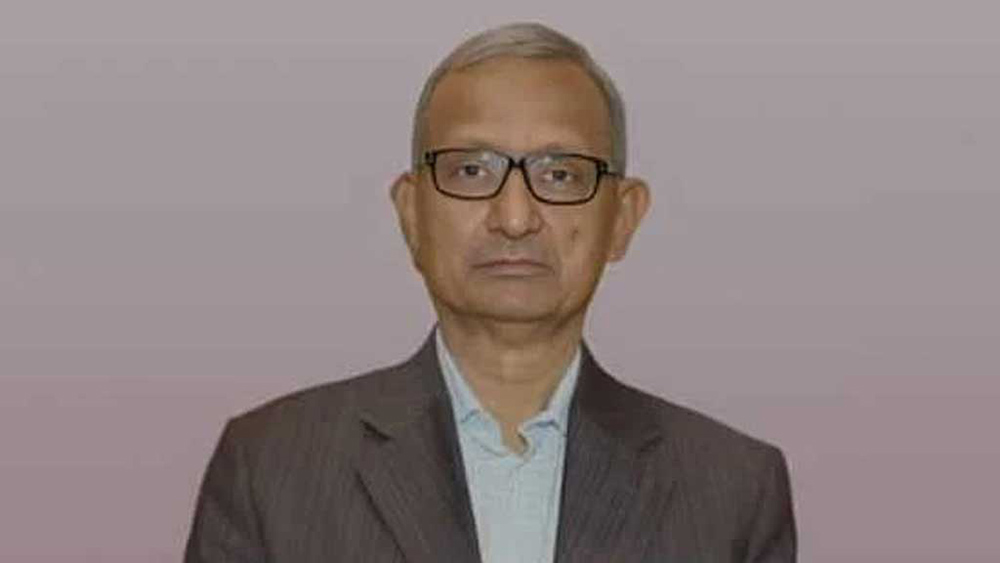
Kathmandu | Khuda Baksh Chowdhury, the Special Assistant to Bangladesh’s Interim Government Chief Adviser Muhammad Yunus, resigned from his position late Wednesday evening. Chowdhury, a former Inspector General of Police (IGP) who held a rank equivalent to a Minister of State, had been overseeing executive authority at the Ministry of Home Affairs since November 2024. His departure was officially confirmed through a gazette notification issued by the Cabinet Division and accepted by President Mohammed Shahabuddin with immediate effect. While the government has not provided an official reason for the resignation, it comes at a critical juncture as the nation prepares for the national elections scheduled for February 12, 2026.
The resignation follows intense public pressure and mounting criticism over the deteriorating law and order situation in Bangladesh. In particular, the “Inqilab Mancha” (Revolutionary Platform), a mass movement born out of the July uprising, had issued a 24-hour ultimatum demanding his resignation. The group held him and the Home Affairs Adviser, Retired Lt. Gen. Jahangir Alam Chowdhury, accountable for the lack of progress in arresting the killers of Sharif Osman Hadi. Hadi, a prominent leader of the student-led uprising and a potential candidate for the upcoming elections, was shot in Dhaka on December 12 and later succumbed to his injuries in Singapore. His death triggered a fresh wave of protests across the capital, including attacks on media offices and cultural institutions, further destabilizing the interim administration.
Chowdhury’s exit is viewed as a significant setback for the Yunus-led government, marking the fourth high-profile departure from the advisory council in recent months. Appointed specifically to boost the morale of the police force and restore institutional discipline following the fall of the Sheikh Hasina regime, Chowdhury faced accusations of failing to take decisive action against rising political violence and mob justice. Critics and political analysts suggest that his resignation reflects a growing internal crisis within the interim government as it struggles to maintain basic order and credibility ahead of the high-stakes February polls.











FACEBOOK COMMENTS