
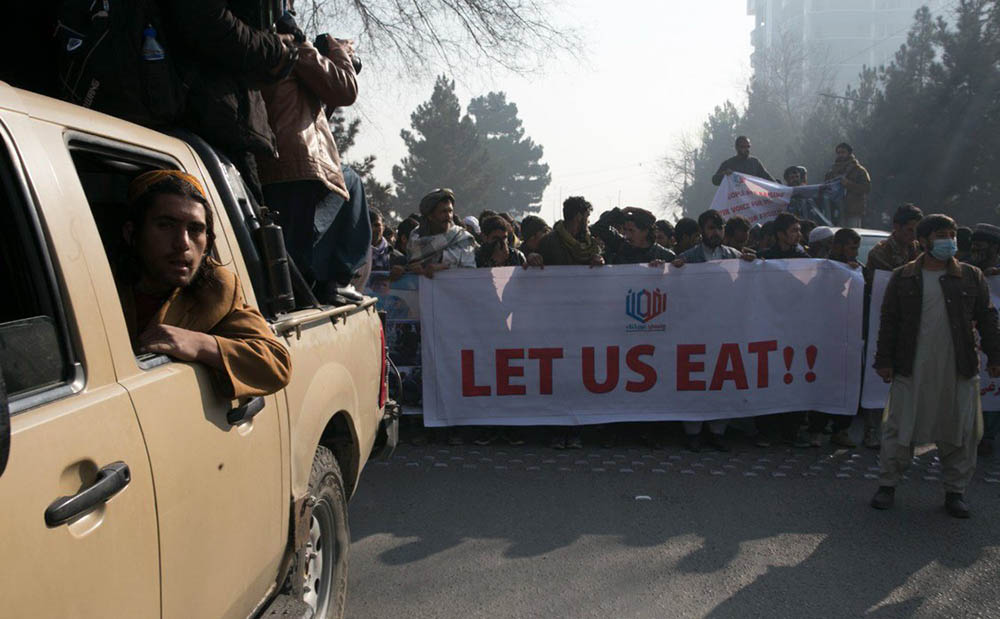
Kathmandu | Severe cuts in international assistance have pushed Afghanistan into a catastrophic humanitarian crisis, leaving more than half the population in desperate need of life-saving support. According to the International Committee of the Red Cross (ICRC), an estimated 22.9 million Afghans are now struggling to find enough food, while the World Food Programme (WFP) has issued a stark warning that 17.4 million people—including 4 million children—are facing crisis-level hunger as the harsh winter sets in. This reflects a staggering increase of 3 million people compared to last year’s hunger statistics. The situation is being compounded by a paralyzed economy, persistent droughts, and the aftermath of two devastating earthquakes, which have destroyed basic infrastructure and left thousands of families homeless in rural provinces.
Adding to the internal pressure, the massive influx of returning refugees from Pakistan and Iran has strained already meager resources. Data from the United Nations High Commissioner for Refugees (UNHCR) indicates that nearly 2.8 million Afghans returned home in 2025, with November alone seeing a record 171,000 arrivals—many of whom were forcibly deported and arrived with no savings or shelter. United Nations humanitarian chief Tom Fletcher recently informed the Security Council that for the first time in years, international food distribution has almost entirely ceased during the winter lean season. While the UN estimates that 22 million people will require assistance throughout 2026, severe funding shortfalls mean the organization will only be able to target 3.9 million of the most vulnerable. Humanitarian agencies warn that without an urgent surge in global contributions, the gap between the scale of the need and the capacity to help will result in a tragedy of historic proportions.









FACEBOOK COMMENTS