
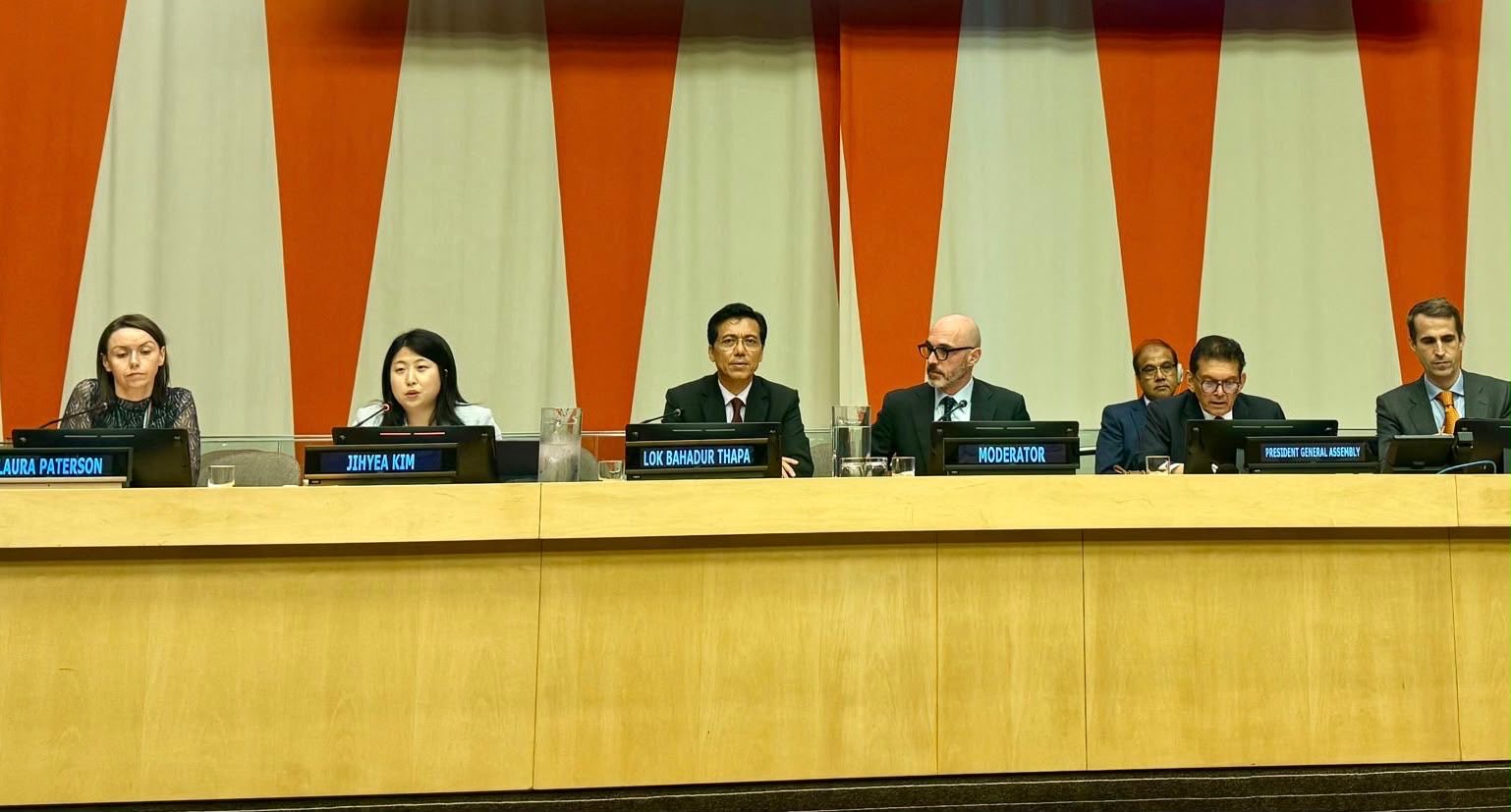
New York, USA : Nepal’s Permanent Representative to the United Nations, Ambassador Lok Bahadur Thapa, has called for expanding integrated, real-time monitoring of Himalayan hazards using advanced technologies and scientific observations to address growing climate risks.
Speaking at a special event convened by the President of the United Nations General Assembly ahead of the 31st Conference of the Parties to the UN Framework Convention on Climate Change (COP31), Ambassador Thapa stressed the need for global solidarity, regional cooperation and timely data-sharing to reduce the impact of climate-related disasters.
According to a press statement issued by the Permanent Mission of Nepal to the United Nations in New York, the panel discussion was held under the theme “From Glaciers to the Sea: Reimagining Early Warning in an Era of Melting Ice and Rising Seas.” It focused on the increasing climate threats facing mountain communities, river basins and coastal regions.
During the discussion, Thapa highlighted the devastating consequences of recent extreme weather events in Nepal, including loss of life, damage to critical infrastructure and setbacks to development progress. Referring to the recent disaster described as the ‘Himalayan Tsunami’, he emphasised the urgent need for a comprehensive mechanism to monitor interconnected climate hazards from high mountain regions to downstream and coastal communities.
He said the growing scale and interconnected nature of climate-related disasters required countries to strengthen forecasting systems, improve information-sharing and coordinate preparedness measures across borders.
Ambassador Thapa outlined several priority areas for improving early warning systems and reducing disaster risks.
Multi-hazard forecasting: He called for the development of integrated forecasting systems capable of detecting and tracking cascading climate hazards across national borders.
Combining science with local knowledge: Thapa emphasised the importance of combining scientific forecasting technologies with traditional knowledge and community-based observations to improve the accuracy and effectiveness of early warnings.
Last-mile warning systems and climate finance: He stressed the need to ensure that warnings reach vulnerable communities in a timely and accessible manner through multilingual alerts and stronger institutional capacity. He also highlighted the importance of predictable, accessible and grant-based climate finance for vulnerable countries such as Nepal.
Early action and preparedness: Thapa called for translating early warnings into practical action by incorporating scientific evidence into national development planning and strengthening disaster preparedness at the community level.
Reaffirming Nepal’s ‘Sagarmatha to the Sea’ initiative, Ambassador Thapa reiterated the country’s commitment to developing people-centred, end-to-end early warning systems through stronger regional scientific cooperation.
The initiative envisions closer coordination between monitoring systems in mountain regions, river basins and coastal areas, enabling countries and communities to better anticipate and respond to interconnected climate threats.
Nepal’s call comes amid growing concerns over the vulnerability of Himalayan communities to extreme weather events, glacial hazards, floods and other climate-related disasters.
Thapa stressed that effective early warning systems must go beyond forecasting and ensure that timely information leads to practical action, particularly for communities most exposed to climate risks.
He also underscored the importance of international cooperation and adequate financial support to help vulnerable countries strengthen their resilience and protect lives, livelihoods and development gains as climate impacts intensify.













FACEBOOK COMMENTS