
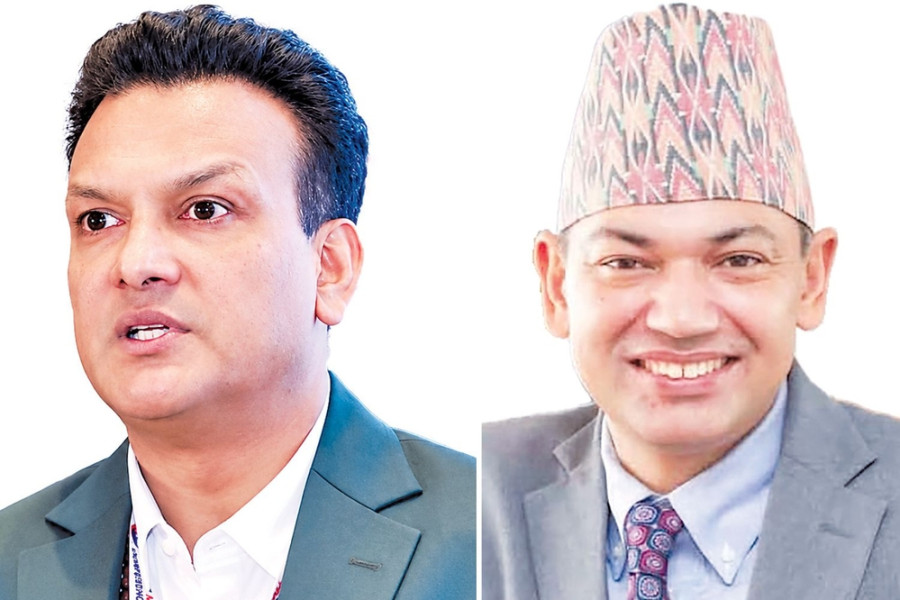
KATHMANDU: The government’s selection of ambassadors has come under scrutiny after two of its nominees faced complaints involving alleged abuse, financial misconduct, foreign residency status and potential conflicts of interest.
The government recommended 13 ambassadorial nominees on September 18 after screening around 4,500 applicants and establishing eligibility criteria. However, complaints against Giri Bahadur Sunar, nominated for Saudi Arabia, and Jigyan Kumar Thapa, nominated for Japan, have raised questions about their eligibility and suitability.
The allegations remain unproven, and both nominees have denied wrongdoing or disputed key claims.
Sunar faces allegations of sexual harassment, threats, gender-based abuse and financial misconduct. A woman who filed a complaint against him presented her allegations before Parliament’s Hearing Committee during a closed-door meeting on Monday.
According to the complaint, the alleged incidents date back more than two decades. The woman claims Sunar threatened her and her family, circulated private photographs and later uploaded a video featuring her minor daughter to YouTube in 2020.
She also alleges that Sunar contacted her after the complaints became public and urged her not to pursue the matter before the committee.
Following the hearing, the committee sought information from the Lalitpur District Police Range regarding action taken over the allegations. It also requested information from the Department of Immigration about whether Sunar had been deported from Germany and sought clarification regarding his political affiliations.
A separate complaint accuses Sunar of collecting Rs3.3 million in connection with the promotion of a Nepal Police deputy inspector general, allegedly in coordination with Rastriya Swatantra Party (RSP) lawmaker Khagendra Sunar. The allegation has not been independently established.
A member of the committee from the ruling RSP described the allegations against Sunar as serious.
Sunar has rejected the accusations, challenging his complainants to provide evidence. He described the dispute with the woman as an old personal matter and said the allegations had been exaggerated. He also denied that the accusations of financial misconduct should be accepted without proof.
Questions have additionally been raised about Sunar’s political affiliations, as the government’s ambassadorial appointment directive disqualifies candidates affiliated with political parties.
Thapa, nominated as ambassador to Japan, is facing complaints questioning his eligibility, financial interests and links to the country.
The complaints allege that Thapa obtained permanent residency in Japan in 2018 and previously owned a house in Kanagawa Prefecture. They argue that his residency status could conflict with the government’s ambassadorial appointment guidelines, which require candidates not to hold permanent or temporary residency permits or equivalent privileges in a foreign country.
Thapa said he surrendered his Japanese permanent residency on March 25, 2026, and denied having personal financial interests or outstanding financial obligations in Japan.
“I obtained permanent residency in Japan in 2018. As of March 25, 2026, I have given up everything related to it,” he said.
He clarified that his wife and children continue to hold Japanese permanent residency, adding that they live in Japan and his children study there.
Thapa also disputed allegations concerning his Nepali citizenship, explaining that permanent residency in Japan does not mean relinquishing Nepali citizenship. He said he had worked as a salaried employee in Japan and had no business interests there.
His former position as general secretary of the Non-Resident Nepali Association (NRNA) in Japan has also drawn scrutiny, with complainants calling for further examination of his eligibility and potential conflicts of interest.
The parliamentary Hearing Committee has begun confirmation hearings for the 13 ambassadorial nominees. Sunar and Thapa are scheduled to appear towards the end of the process.
The complaints have put the government’s ambassadorial selection process under scrutiny despite its screening of thousands of applicants. The committee’s examination is expected to focus on the nominees’ eligibility, conduct, political affiliations and potential conflicts of interest.
The allegations against both nominees remain subject to verification, and their responses will be relevant to the committee’s assessment of their proposed appointments.














FACEBOOK COMMENTS