
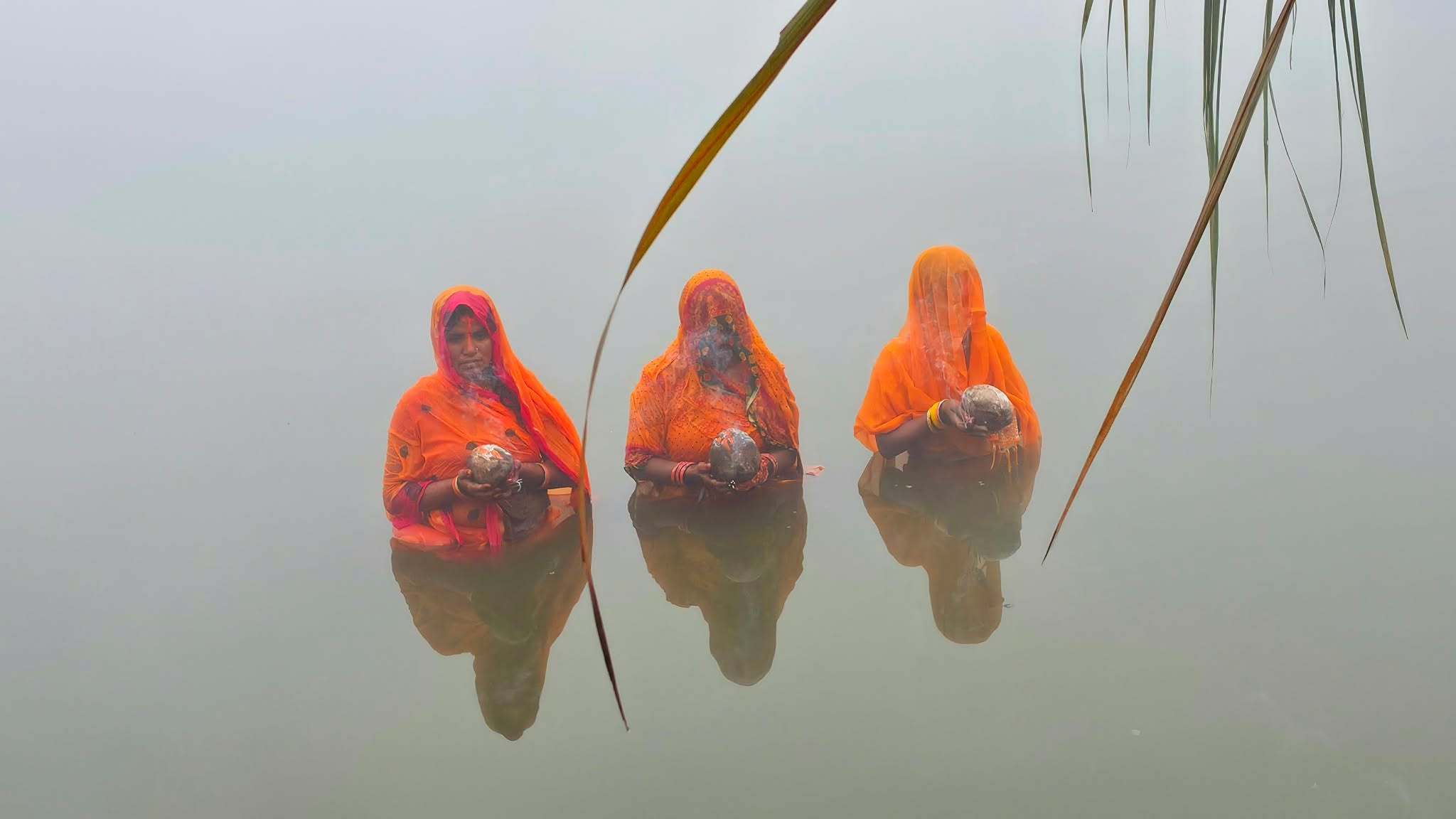
MAHOTTARI, Nepal: The Chhath festival concluded on Monday morning as devotees offered prayers and water (Arghya) to the rising sun on the seventh day of the Hindu festival.
Devotees observing the fast since Saturday midnight completed the festival by offering Arghya to the Sun God at sunrise. Across Mahottari and other parts of Nepal’s Madhesh region, worshippers gathered at riverbanks, ponds and other designated Chhath sites to perform the final rituals.
Earlier, on Sunday evening, devotees had offered the first Arghya to the setting sun on the sixth day, known as Sanjhiya Ghat or Sanjhuka Arakh in the Mithila region.
Following Monday morning’s rituals, devotees returned home, marking the completion of the four-day festival. The celebrations began on the fourth day of the lunar fortnight with Nahay-Khay, during which devotees took ritual baths and ate pure food before making their fasting vows.
On the fifth day, they observed Kharna, consuming a single meal of unsalted food after sunset. The festival is celebrated from the fourth to the seventh day of the waxing moon in the month of Kartik.
The final morning ritual, when devotees offer Arghya to the rising sun, is locally known as Bhor Ka Arakh or Paran.
After returning home, devotees traditionally distribute food and clothes to the poor and needy before breaking their fast by consuming Chhath offerings.
Traditional delicacies such as Thekuwa and Bhusuwa, along with bananas, other fruits and yoghurt prepared in earthen pots, are offered to the Sun God and later distributed as Prasad.
In the Mithila region, the tradition of sharing Chhath Prasad continues for weeks. Devotees send special baskets of offerings, locally known as Bhaar, to daughters, relatives, friends and other loved ones.
According to popular religious belief, observing the Chhath fast brings happiness, prosperity and good health while protecting devotees from illness.











FACEBOOK COMMENTS