
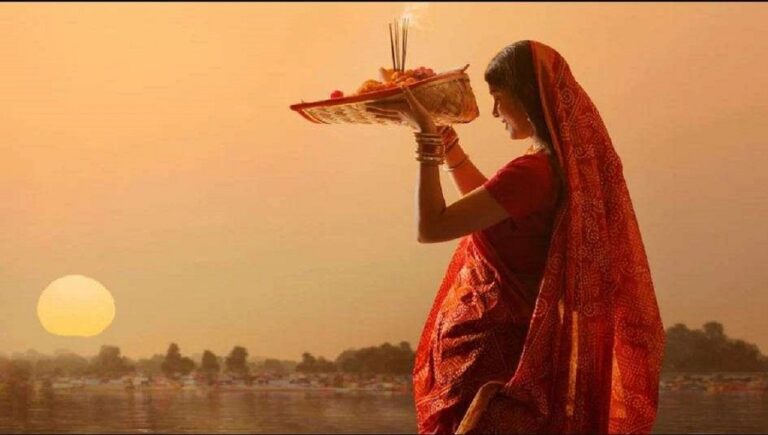
Kathmandu: Devotees across Nepal are observing the main day of the Chhath festival today by worshipping the setting sun and offering Arghya (ritual offerings). The four-day festival, dedicated to the worship and veneration of the Sun God, began on Friday and is celebrated from the fourth to the seventh day of the bright fortnight of the Nepali lunar month of Kartik.
According to the Hindu epic Mahabharata, Draupadi and the five Pandavas worshipped the Sun God during their period of exile, praying for the successful completion of their time in hiding. The Pandavas are believed to have stayed at the palace of King Virata during this period. According to popular folklore, this practice marked the beginning of the Chhath tradition.
The Surya Purana, another Hindu religious text, mentions that Anusuya, the wife of Sage Atri, was the first to observe the Chhath fast. Through her devotion, she is believed to have attained lasting marital happiness and devotion from her husband. The tradition of celebrating Chhath is believed to have originated from that time.
The Sun is regarded as the source of energy and life on Earth. Plants, vegetation, animals and all living beings depend on solar energy for their existence. Sunlight has also been studied for its therapeutic properties, with various medical texts discussing its potential health benefits.
Religious scriptures also describe how Samba, the son of Lord Krishna, was cured of leprosy through worship of the Sun God after suffering from a curse attributed to his father and Sage Durvasa.
Devotees believe that observing the Chhath fast brings relief from suffering and poverty. Offering various fruits and seasonal produce to the Sun God is also believed to bring prosperity and well-being to family members and children.
On the fourth day of the bright lunar fortnight, devotees take a ritual bath and eat only one meal. On the fifth day, known as Kharna, they prepare a special pudding called Kheer using jaggery, offer it to Chhathi Maiya and consume it as prasad. Devotees subsequently observe dietary restrictions, avoiding salt and consuming only permitted food.
The sixth day is the most important day of the festival. Devotees observe a strict fast without food or water and offer prayers and Arghya to the setting sun in the evening.
Anil Singh, chairman of the Guhyeshwari Gaurighat Chhath Puja Committee, said that devotees remain awake throughout the night following the evening rituals.
“On the seventh day of the bright lunar fortnight, devotees worship the rising sun in the morning and offer Arghya according to religious rituals, bringing the four-day festival to an end,” he said.
There is also a religious belief that worshipping the Sun God and offering Arghya during the bright fortnight of Kartik protects devotees from skin diseases.
Once primarily celebrated in limited areas of the Terai region before 1990, Chhath has gradually developed into a festival of national significance.
The government began granting a public holiday nationwide on the occasion from 1990. Although the holiday was discontinued for several years, it was later reinstated.
In Kathmandu, preparations and decorations have been made at several locations, including the Guhyeshwari–Gaurighat area, Gahanapokhari, Nagpokhari, Kamalpokhari and the banks of the Bagmati, Nakhu and Bishnumati rivers.
Devotees begin observing dietary and personal purity practices from the fourth day of the festival. Some devotees, however, start following a strict vegetarian and sattvic diet, avoiding garlic, onions and other foods considered tamasic, from the day after Kojagrat Purnima, which falls on the first day of the dark fortnight of Ashwin.
The four-day Chhath festival concludes on the morning of the seventh day with prayers and offerings to the rising sun.










FACEBOOK COMMENTS