
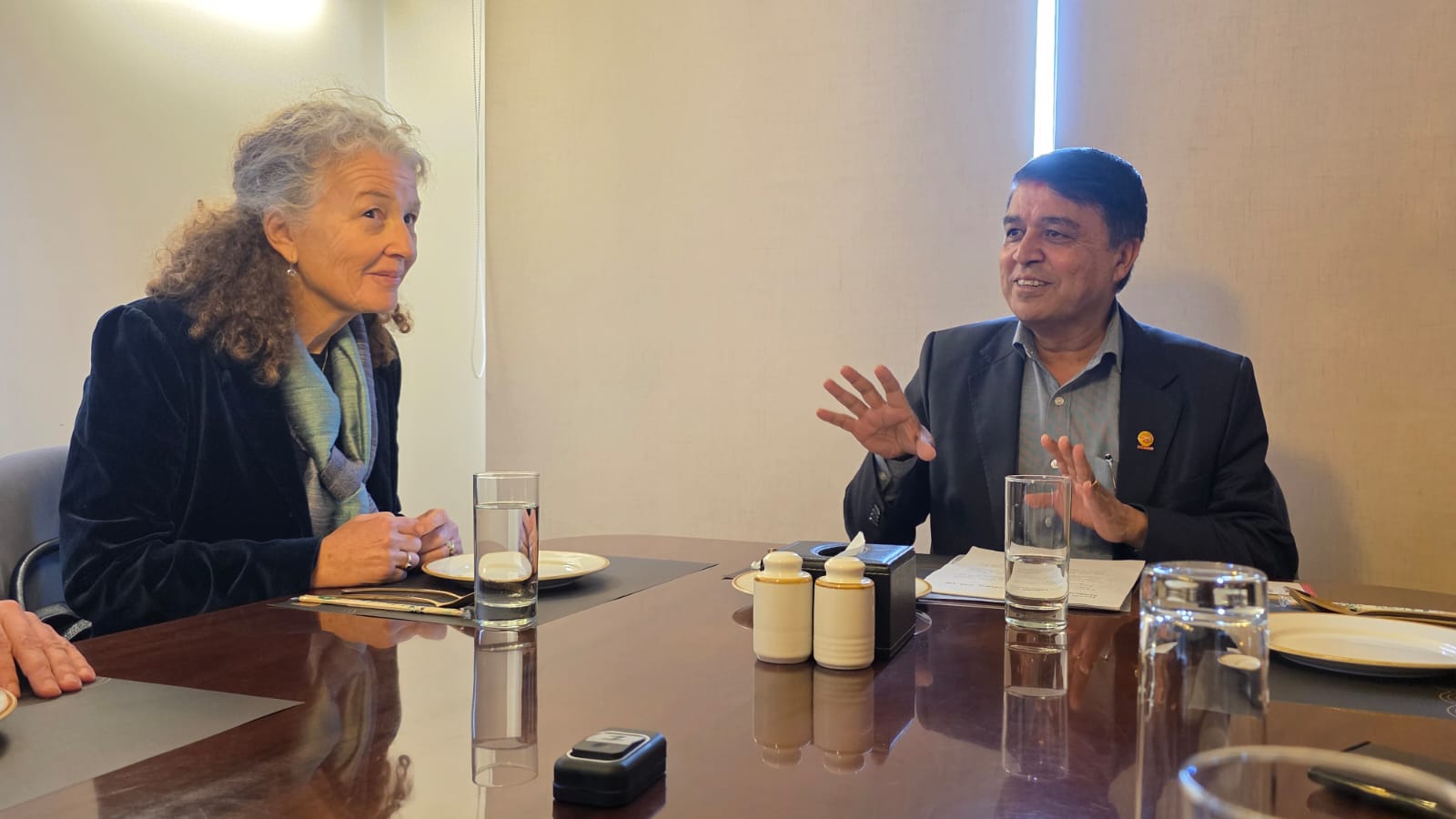
President Dhakal pointed out that Nepal’s economic sensitivity remains high, noting that the country only recently and slightly crossed the per capita income threshold. He highlighted a disconnect in the current economy where, despite liquidity in banks, the will for private investment remains weak. He warned that a hasty graduation could create significant hurdles, particularly for the approximately 300,000 agriculture-based small and medium enterprises (SMEs) that currently benefit from preferential trade terms in European markets. Drawing a comparison to Bangladesh, which has also sought a three-year extension, he stated that Nepal’s private sector demand is both relevant and necessary to avoid rising costs and the loss of international subsidies.
In response, UN Resident Coordinator Lila Pieter Yahia expressed a positive stance toward strengthening the partnership with Nepal’s private sector. Regarding the timeline extension, she suggested a collaborative dialogue involving the United Nations, the World Bank, the International Monetary Fund (IMF), the Government of Nepal, and the private sector to reach a consensus. While affirming the UN’s desire to see Nepal graduate, she emphasized that the perspectives of key stakeholders are vital to the process. Ms. Yahia also stressed the importance of predictable policies, national institutional trust, and leveraging Nepal’s youth population to drive economic development through targeted strategies for import substitution and export promotion.
The meeting also touched upon the upcoming elections and the future economic landscape. President Dhakal informed the Coordinator that the FNCCI has been proactive in advocating for legal amendments to create an investment-friendly environment and ensuring policy stability. He shared that the Federation has urged all political parties to keep the economy at the center of their agendas, ensuring that national economic priorities remain stable and insulated from shifting political cycles.










FACEBOOK COMMENTS