
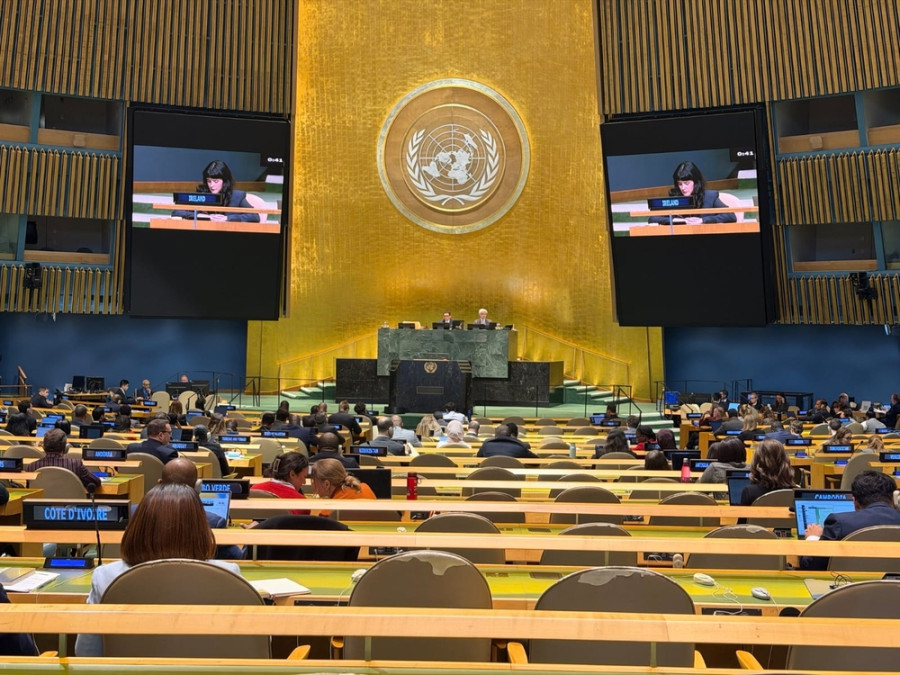
KATHMANDU: Nepal has secured an additional three years to prepare for its graduation from the category of Least Developed Countries (LDCs), after the United Nations General Assembly unanimously approved an extension of the preparatory period for Nepal and Bangladesh.
Under the decision, both countries will now have until November 24, 2029, to prepare for the transition. The resolution, numbered 81/L.8, was adopted during the 81st session of the General Assembly in New York following a joint initiative by Nepal and Bangladesh.
The extension is expected to provide Nepal with additional time to strengthen its economy, improve productive capacity and prepare for the gradual withdrawal of international support measures available to LDCs.
Khalilur Rahman, president of the 81st session of the UN General Assembly and Bangladesh’s foreign minister, said the decision reflected the economic uncertainties, external shocks and continuing vulnerabilities faced by the two countries.
He described the extension as an investment in sustainable progress, stressing that graduation should support development rather than create disruptions. He also said the success of the process should be measured through stronger resilience, effective reforms and secured development gains.
Nepal was originally scheduled to graduate from the LDC category on November 24, 2026. The General Assembly had endorsed the country’s graduation in November 2021, granting it an exceptional five-year preparatory period instead of the usual three years, considering the economic and social impact of the COVID-19 pandemic.
However, as the deadline approached, the government raised concerns about the country’s readiness to manage the consequences of graduation. Nepal formally requested an extension on May 13, 2026, seeking additional time until November 2029.
The Ministry of Foreign Affairs cited changing domestic and international economic conditions, geopolitical tensions, disruptions to global supply chains and possible effects on remittance inflows as key reasons behind the request.
The government also expressed concerns about the potential loss of duty-free and quota-free market access for Nepali products, delays in implementing the Smooth Transition Strategy and weaknesses in productive and institutional capacity. Government-cited studies have warned that employment in productive sectors could fall by up to 35 percent after graduation if adequate transition measures are not implemented.
Nepal has been classified as an LDC since 1971. Although the country first met the UN’s graduation criteria in 2015, it sought a postponement in 2018, citing the consequences of the devastating 2015 earthquake and subsequent disasters.
During its 2021 triennial review, the UN Committee for Development Policy again recommended Nepal’s graduation after the country met the required thresholds for the Human Assets Index and the Economic and Environmental Vulnerability Index. Although its gross national income per capita remained below the prescribed threshold, Nepal qualified by meeting the other two criteria.
To prepare for graduation, Nepal adopted its Smooth Transition Strategy in February 2024. The strategy identifies six priority areas: macroeconomic stability; trade and investment; economic transformation; productive capacity; climate change and disaster risk management; and social inclusion.
The additional three years are expected to give the government more time to implement the strategy, improve export competitiveness, strengthen institutions and build a more resilient economy.
Nepal has stated that it will use the extended period to enhance productive capacity, accelerate economic and social transformation, and ensure effective implementation of the 2030 Agenda for Sustainable Development and the Doha Programme of Action.
Following the adoption of the resolution, Nepal’s Permanent Mission to the United Nations expressed gratitude to UN member states for their cooperation, solidarity and support.





FACEBOOK COMMENTS