
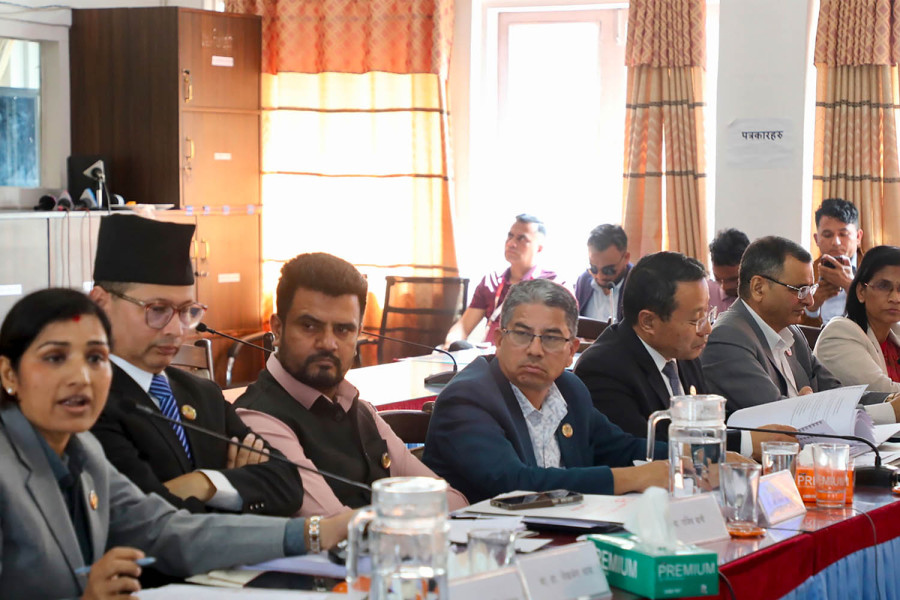
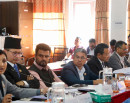
KATHMANDU: Nepal’s proposed ambassadors to India, China, the United States and the United Kingdom faced rigorous questioning from lawmakers during parliamentary hearings on Monday, with legislators seeking clear plans to resolve longstanding bilateral disputes and strengthen diplomatic and economic relations.
Nischal Nath Pandey, nominated as ambassador to India, and Kalyan Raj Sharma, proposed for China, were questioned on border disputes, trade barriers, infrastructure projects, political influence and the protection of Nepali citizens abroad. Chiran Jung Thapa, nominated to the United States, and former Nepali Army chief General Gaurav Sumsher Rana, proposed for the United Kingdom, also presented their priorities before the Parliamentary Hearing Special Committee.
Pandey, who previously headed the Centre for South Asian Studies, defended his professional credentials after ruling Rastriya Swatantra Party (RSP) lawmaker Rajiv Khatri questioned whether his nomination was influenced by his father Ramesh Nath Pandey’s political background. His father has served as a minister five times.
Rejecting the suggestion that his appointment represented political nepotism, Pandey argued that his academic qualifications, PhD and professional experience should be assessed independently of his family background.
He said the term “nepo baby” should apply to individuals who rely entirely on family wealth and connections without developing their own qualifications or professional experience. He also argued that the children of former ministers or prime ministers should not automatically be considered beneficiaries of nepotism.
Khatri also questioned Pandey about his previous description of Nepal’s diplomatic machinery as “rusty” and asked how he would make it more effective. Concerns were also raised about whether his long association with the same research institution could create a conflict of interest.
Another RSP lawmaker, Madhu Kumar Chaulagain, sought concrete proposals for exchanging Indian Rs500 and Rs1,000 banknotes that remained in Nepal following India’s 2016 demonetisation.
Chaulagain also raised recurring floods in the Tarai linked to infrastructure near the India-Nepal border, India’s reluctance to purchase electricity from hydropower projects involving Chinese investment, delays in the Pancheshwar project and progress on the Postal Highway.
The protection of Nepali workers employed in India’s informal sector was another concern.
RSP lawmaker Lekh Jung Thapa asked how Nepal could use its hydropower potential to generate economic and diplomatic benefits, while also raising concerns about road connectivity near the Sunauli border.
Similarly, RSP lawmaker Punam Kumari Agrawal sought a clear strategy to resolve the territorial dispute involving Lipulekh, Limpiyadhura and Kalapani. She also asked how Nepal would respond to diplomatic pressure that conflicts with its national interests and secure access to Indian airspace for the full operation of Gautam Buddha International Airport in Bhairahawa.
Responding to the questions, Pandey pledged to keep bilateral mechanisms active and focused on results. He proposed establishing a dedicated calendar for Nepal-India engagements and conducting periodic reviews between the two countries’ heads of government to assess progress, resolve obstacles and ensure that agreements are implemented.
If approved by the parliamentary hearing committee, his nomination will be forwarded to the Indian government for approval.
Sharma, Nepal’s proposed ambassador to China, pledged to protect Nepal’s national interests, maintain political trust between the two countries and ensure that diplomatic engagement delivers practical benefits to Nepali citizens.
He proposed regular engagement with China’s Ministry of Foreign Affairs, the Communist Party, the State Council, the National People’s Congress, provincial governments, universities and research institutions.
Sharma also stressed the importance of a capable diplomatic mission, sustained communication to address misunderstandings and systematic follow-up to ensure that bilateral agreements translate into tangible outcomes.
Several infrastructure projects featured prominently in his agenda, including the Rasuwagadhi bridge, Syaphrubesi-Rasuwagadhi road, Araniko Highway, Kathmandu Ring Road, Kerung-Rasuwagadhi-Chilime transmission line and Kimathanka road.
He also pledged to monitor progress on the export of processed buffalo meat, citrus fruits, fodder and silage to China, alongside the development of industrial parks and special economic zones.
To promote Nepali products in the Chinese market, Sharma proposed an export strategy based on the slogan “Made in Nepal, branded in Nepal and sold in China.”
Connectivity and transit cooperation were also central to his plans. He pledged to work towards the regular operation and improvement of 14 traditional border trade points and make better use of four seaports and three inland dry ports available to Nepal under the Nepal-China Transit Transport Agreement.
He also committed to monitoring prospects for extending the railway to Kerung and strengthening cooperation with Lhasa and communities along the border on trade and transit issues.
Sharma said Nepal’s Consulate General in Lhasa should play a central role in border operations, the Kailash Manasarovar pilgrimage, trade and the protection of Nepali citizens’ interests.
However, lawmakers raised concerns that extended beyond trade and infrastructure.
CPN-UML deputy parliamentary party leader Padma Aryal asked how Sharma would address cases in which Nepali women were taken to China under the pretext of marriage and subsequently left stranded there. She also sought plans to improve the operation of Pokhara and Bhairahawa international airports and ensure the effective functioning of border points with China.
RSP lawmaker Chaulagain questioned whether Sharma’s expertise in Chinese studies and economics would translate into a firm commitment to Nepal’s national interests.
“Will your priority be China’s wishes or Nepal’s interests?” he asked.
Sharma pledged to represent Nepal’s interests faithfully while maintaining trust and constructive relations between the two governments.
Thapa, nominated as Nepal’s ambassador to the United States, pledged to strengthen bilateral relations, raise Nepal’s international profile and safeguard the country’s national interests.
He said he would work to ensure Nepal’s participation in important events in Washington, D.C., and use his diplomatic network to facilitate high-level visits between the two countries.
Improving consular services for Nepali citizens living in the United States would also be a priority. Thapa proposed expanding service availability, including opening consular services on public holidays when necessary to meet the needs of the Nepali community.
On security cooperation, he acknowledged US assistance to Nepal and said such support should be aligned with the country’s priorities and requirements.
He also pledged to promote technology transfer, particularly in technology and cybersecurity, and improve the effectiveness of US assistance in areas such as peacekeeping and disaster management, in line with government directives.
Rana, a former chief of the Nepali Army and Nepal’s proposed ambassador to the United Kingdom, said economic diplomacy would be a major focus of his tenure.
He argued that Nepal should make better use of its longstanding relationship with the UK to attract investment, increase exports and expand tourism.
Rana also pledged to take special initiatives to address the concerns and grievances of Gurkha soldiers serving in the British military, an issue that has remained significant in Nepal-UK relations.
The four nominees outlined their commitments as Nepal seeks to strengthen diplomatic engagement, improve services for its citizens abroad and expand international cooperation in trade, investment, infrastructure and security.
Their proposed appointments remain subject to the parliamentary hearing process.









FACEBOOK COMMENTS