
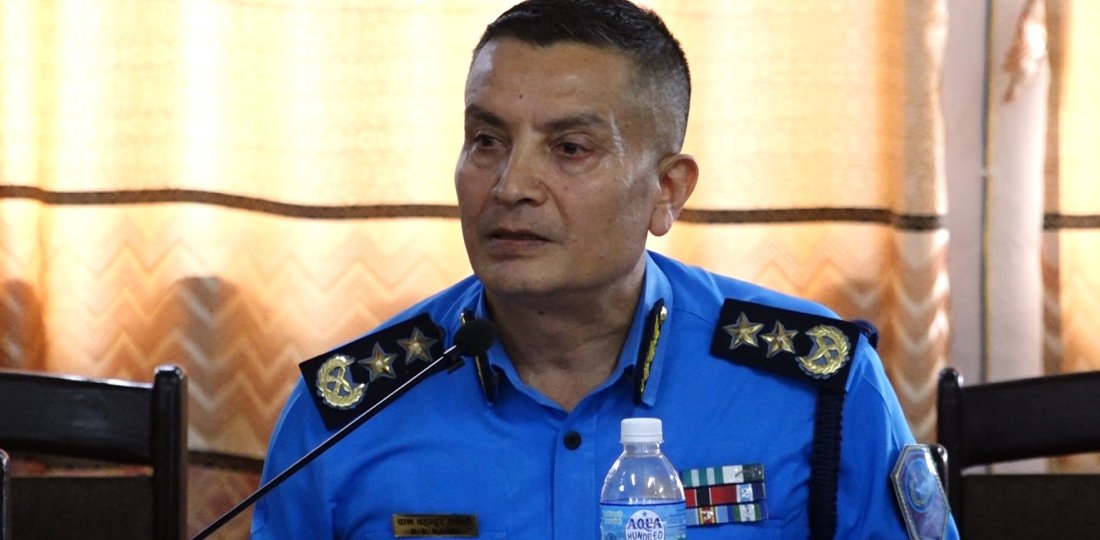
Kathmandu: The government’s decision to remove incumbent Inspector General of Police (IGP) Dan Bahadur Karki and transfer him to the post of National Security Advisor, while appointing Additional Inspector General (AIG) Dr. Manoj Kumar KC as the new police chief, has once again brought Nepal Police leadership under the spotlight over allegations of political interference.
The move has revived memories of a similar controversy nearly three decades ago, when then Home Minister Bam Dev Gautam removed IGP Achyut Krishna Kharel from office in 1996.
At the time, a special bench of the Supreme Court, in its landmark verdict on July 3, 1998 (Ashadh 19, 2055 BS), declared the government’s decision arbitrary, baseless and motivated by improper intentions. The court established an important legal precedent, ruling that an incumbent police chief cannot be removed simply to create an opportunity for another individual to be promoted.
The Supreme Court had also warned that allowing the police administration to function on the basis of political favouritism could undermine law and order in the country.
Against this legal and historical backdrop, IGP Karki now appears to have two possible courses of action.
Option One: Challenge the Government’s Decision in the Supreme Court
The first and potentially strongest legal option for Karki is to file a writ petition at the Supreme Court, challenging the government’s decision and seeking reinstatement.
The precedent established in the Achyut Krishna Kharel case could provide a significant legal basis for his challenge. In its earlier ruling, the Supreme Court had made it clear that removing an officer who remains legally eligible to continue in office merely to facilitate the appointment or promotion of another individual cannot be considered a decision based on sound judgment or legal principles.
Karki could argue that he was removed without any demonstrated departmental misconduct, incompetence or other valid grounds, and that the decision was primarily intended to clear the way for Dr. Manoj Kumar KC’s appointment as IGP.
Such circumstances could form the basis of a legal argument that the government’s decision was motivated by improper intentions and violated established principles of administrative fairness.
Option Two: Accept the New Assignment or Opt for an Honourable Exit
The second option would be to avoid a direct legal confrontation with the government by accepting the new responsibility as National Security Advisor or choosing to resign.
A legal battle with the executive could create practical difficulties even if the Supreme Court eventually orders his reinstatement. Coordination with the government, budget management and day-to-day administrative cooperation could become challenging in the aftermath of such a confrontation.
The experience of Achyut Krishna Kharel is also relevant. Although he was reinstated following the Supreme Court’s intervention, political tensions and administrative complications continued.
Against this background, accepting the position of National Security Advisor could be a relatively secure and less confrontational option for Karki. The position is strategically important at the policy level and could provide him with an opportunity to contribute to the country’s broader national security framework.
The Supreme Court’s landmark ruling nearly three decades ago had already established that arbitrary executive decisions of this nature run contrary to the principles of the rule of law.
Whether Karki chooses to challenge the government’s decision in court or accept the alternative assignment remains to be seen. His next move could have implications not only for his own career but also for the institutional independence and future leadership practices of Nepal Police.



FACEBOOK COMMENTS