
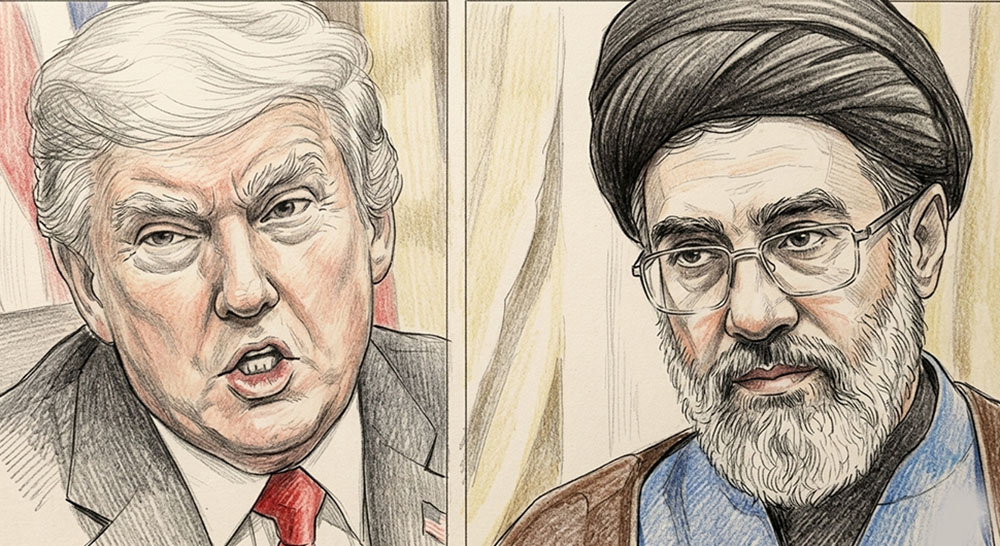
KATHMANDU: The United States has imposed new sanctions on five vital sectors of Iran’s economy. The US announced these sanctions targeting digital assets, technology, gold, aviation, and maritime shipping—sectors Iran uses to conduct economic activities with other countries.
Through these restrictions, the US aims to block Iran’s revenue generation and curb its international trade. It has also been stated that the US could impose further sanctions on foreign nations that engage in transactions within these sectors to provide economic benefits to Iran.
However, the US has not specified which exact countries will face additional sanctions. China, Turkey, and the United Arab Emirates currently serve as Iran’s major trading partners.
US Treasury Secretary Scott Bessent stated that an “economic isolation campaign” has been launched. According to him, this campaign will focus on Iran and its supporting nations. He remarked that Iran now faces a choice between being entirely isolated from the world within a limited economy or returning to normalcy by re-joining the global economy.
The impact of additional US sanctions will not be limited to Iran alone. If any foreign company transacts with Iran in the sanctioned sectors, such companies could also face action from the United States.
Primary US pressure is exerted through its currency and banking system. Once sanctions are imposed on a company, conducting business with US banks and firms becomes difficult. In some instances, access for such companies to the US financial system can be completely blocked.
Consequently, companies in India, China, Turkey, or the United Arab Emirates face risks to their access to US markets and financial systems if they continue trading with Iran. Due to this risk, many foreign companies are likely to reduce transactions or distance themselves from Iran to avoid falling under US sanctions.















FACEBOOK COMMENTS