
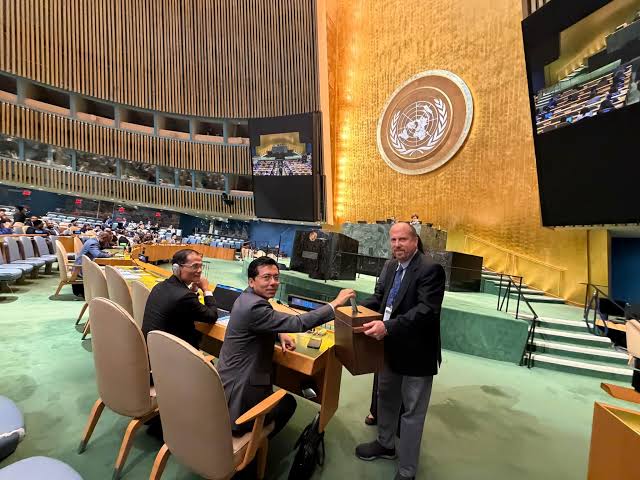
KATHMANDU: Nepal has been elected to the United Nations Human Rights Council (UNHRC) for the 2027–2029 term, securing 173 of the 180 votes cast in the UN General Assembly, according to Nepal’s Permanent Mission to the United Nations in New York.
Nepal received the highest number of votes among the countries elected in its regional group, the mission said in a statement welcoming the election.
The government expressed gratitude to UN member states for their trust and confidence in Nepal’s commitment to multilateralism, human rights, international law and a rules-based international system centred on the United Nations.
Nepal also congratulated Brazil, Burundi, the Dominican Republic, Germany, Ghana, Ireland, Japan, Jordan, Kuwait, Moldova, Nigeria, Ukraine, Uruguay and Zambia on their election to the 47-member Human Rights Council for the 2027–2029 term.
Following its election, Nepal said it looked forward to working with UN member states and other partners to safeguard human dignity, promote inclusion and social justice, and advance equitable development, with a commitment to leaving no one behind.
Nepal previously served two consecutive terms on the Human Rights Council from 2018 to 2023. Its latest election provides another opportunity for the country to contribute to the UN’s principal intergovernmental body responsible for promoting and protecting human rights worldwide.
Established in 2006 and headquartered in Geneva, Switzerland, the Human Rights Council comprises 47 member states elected by the UN General Assembly. Members serve three-year terms, with seats allocated among the UN’s regional groups and elections conducted through a secret ballot.
The council reviews the human rights records of all UN member states through the Universal Periodic Review (UPR), addresses human rights violations and makes recommendations to strengthen protection and accountability. Its responsibilities also include appointing independent experts, known as special rapporteurs, to investigate and report on specific human rights situations and thematic issues.
For Nepal, membership provides an important diplomatic platform to engage with the international community and contribute to global human rights initiatives. It also carries responsibilities, including upholding the universality of human rights, engaging constructively with international scrutiny and supporting multilateral efforts to address human rights concerns.
Nepal’s performance during its new term will be assessed against its commitments to human rights, inclusion, social justice and the protection of fundamental freedoms, both domestically and internationally.









FACEBOOK COMMENTS