

Kathmandu — International crude oil prices escalated following reciprocal attacks targeting merchant vessels between the United States and Iran, raising global concerns over potential long-term disruptions to Middle Eastern energy supplies. On Monday, Brent crude oil rose to $96.80 per barrel, while US West Texas Intermediate (WTI) climbed to $92.14 per barrel, extending strong momentum after Brent surged 7.8% and WTI gained nearly 10% during the previous week.
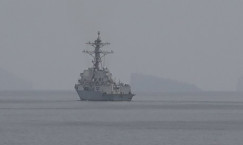
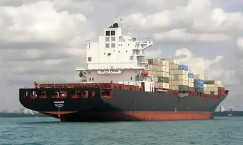
The price spike follows military operations where US forces targeted three Iranian oil tankers on Saturday, prompting Iran’s Islamic Revolutionary Guard Corps to retaliate by targeting three oil tankers and other US-linked vessels passing through the region. With nearly one-fifth of the world’s oil supply transiting through the critical Strait of Hormuz, the escalating conflict threatens global supply lines, as recent tracking data reveals that an average of only 10 commercial ships daily navigated the passage over the past ten days.
Tehran has signaled plans to declare a restricted maritime zone beyond the Strait of Hormuz in the coming days, further compounding market anxieties. Amid the ongoing turmoil, the OPEC+ oil cartel decided to maintain its current production policies unchanged for October. Energy analysts warn that if US-Iran hostilities persist, full normalization of Middle Eastern oil exports could be delayed through the end of 2026, with recovery to pre-conflict supply levels likely deferred until the first or second quarter of 2027.











FACEBOOK COMMENTS