
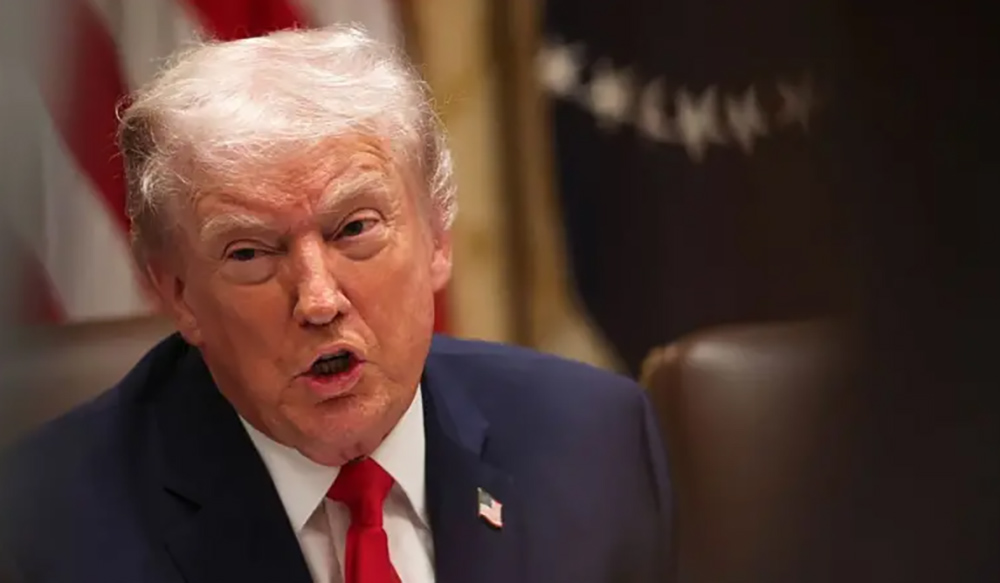
KATHMANDU — U.S. President Donald Trump has declared that he is not in favor of extending the current ceasefire with Iran, marking a tense turning point in the ongoing regional conflict. In a recent interview, the President emphasized that the next 48 hours will be critical, stating that the future of the region now depends entirely on how the war is concluded.
While Trump acknowledged that the conflict could end in several ways, he noted a preference for a diplomatic settlement. He suggested that if a formal agreement is reached, Iran would be granted the opportunity for reconstruction, further claiming that the country is already transitioning under a new form of governance following the removal of extremist factions.
In tandem with these diplomatic warnings, the United States has moved to physically isolate Iran by enforcing a rigorous blockade in the Strait of Hormuz. According to reports from the Everest News Agency, the U.S. military has deployed over 10,000 troops and approximately 12 naval warships to the strategic waterway to ensure no vessels pass through. U.S. Central Command (CENTCOM) confirmed that the blockade has been highly effective in its initial phase, noting that during the first 24 hours, not a single ship was able to transit the strait. Six commercial vessels that attempted to proceed were intercepted by U.S. naval orders and forced to turn back, signaling a period of intense “maximalist” pressure as the deadline for the ceasefire approaches.












FACEBOOK COMMENTS