
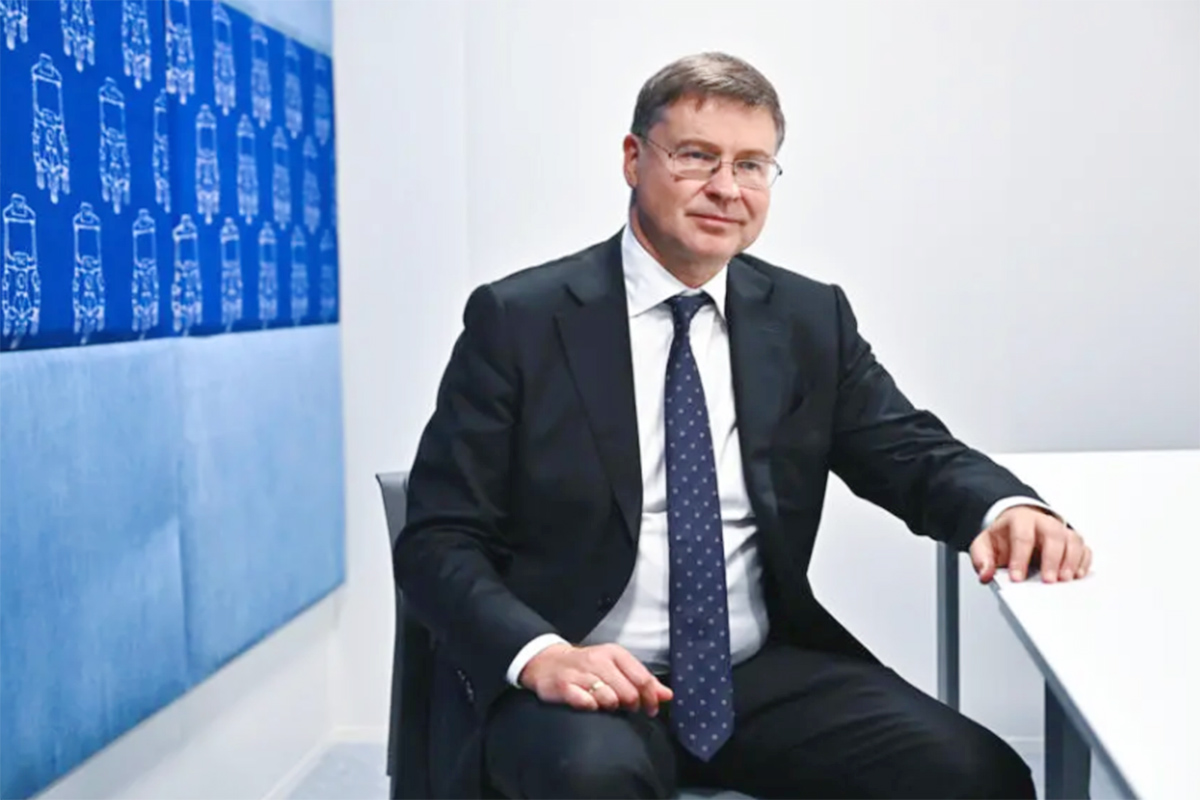
BANGKOK: European Union economy chief Valdis Dombrovskis has cast doubt on the potential impact of Russian diesel exports recently authorised by the United States, saying the move is unlikely to significantly reduce global fuel prices.
Speaking to AFP on the sidelines of the IMF-World Bank Annual Meetings in Bangkok on Tuesday, Dombrovskis said the proposed export volumes were too small to have a meaningful impact on the wider market. He also questioned whether Russia could supply the quantities required and meet US quality standards.
US President Donald Trump announced on Friday that he had spoken with Russian President Vladimir Putin and reached an understanding on releasing large volumes of Russian diesel onto international markets. The move was intended to ease fuel price pressures that have intensified since the United States launched its war on Iran on February 28.
Dombrovskis also said the European Union would seek stronger international financial support for Ukraine during the meetings in the Thai capital.
The EU economy chief called for a broader rebalancing of trade relations with China, pointing to the bloc’s trade deficit of around €360 billion last year—equivalent to nearly €1 billion a day.
His remarks followed an agreement between Brussels and Beijing to limit Chinese hybrid vehicle exports to the 27-member European Union, in an effort to prevent escalating trade tensions.
Under the arrangement, annual imports will be capped at 350,000 vehicles from 2027 for an initial four-year period. The limit will increase by 6 percent annually from the second year.
Dombrovskis said the automotive sector was only one part of the wider trade relationship and stressed the need for more balanced exchanges across multiple industries.
Dombrovskis also expressed concern about rising government bond yields in Europe, particularly in France, where the yield on 10-year government bonds has approached 5 percent—a level not seen since 2002.
He said France needed to pass its recently presented draft budget to reduce uncertainty among investors and address concerns over public finances.
Prolonged uncertainty could push borrowing costs higher, he warned. However, he said France’s relatively long average debt maturity meant the impact of higher yields on debt-servicing costs would emerge gradually. He did not consider the situation an immediate threat to financial stability.
Dombrovskis urged eurozone governments to make the necessary adjustments to ensure their public finances remained sustainable.
The European Commission is expected to revise its inflation projections upward in its autumn economic outlook, with the prolonged conflict in the Middle East adding to energy price pressures.
Dombrovskis said the inflation shock linked to the war in Iran was likely to last longer than previously anticipated. As a result, the EU is highly likely to raise its inflation forecast for 2027.
The conflict’s continued impact on energy prices remains a major concern for European policymakers as they assess the outlook for inflation, economic growth and financial stability.













FACEBOOK COMMENTS