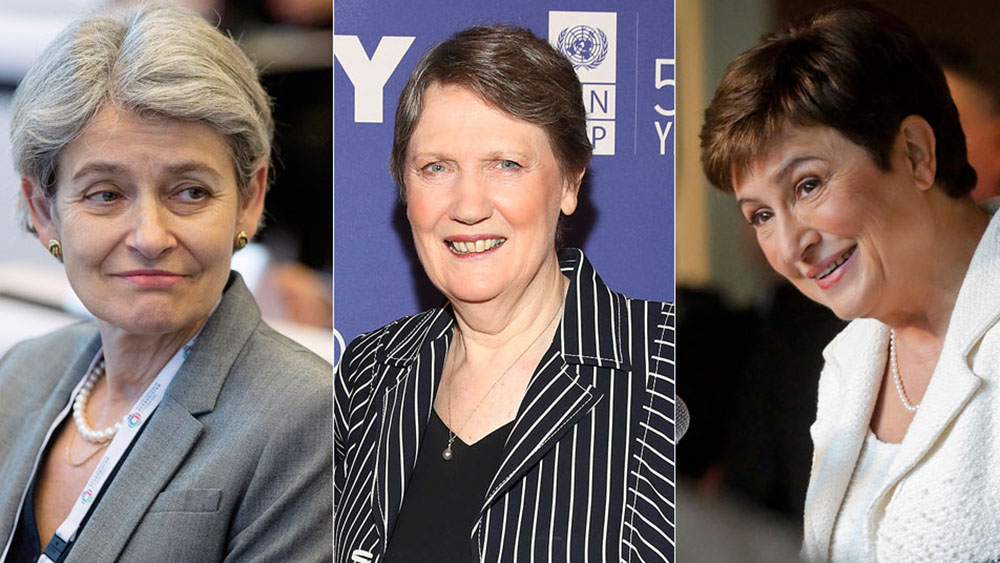
Kathmandu. For the first time in the 80-year history of the United Nations, there is a strong possibility of a woman becoming the Secretary-General. Eight candidates are currently competing for the post of Secretary-General, five of whom are women. In the second round of straw polls held on Friday, Carolyn Rodrigues-Birkett of Guyana took the lead. Rebeca Grynspan of Costa Rica is in second place.
The second five-year term of the current UN Secretary-General, António Guterres, ends on December 31, 2026. Therefore, the selection process for the new Secretary-General has already begun.
The Secretary-General of the United Nations is not directly elected by the public or by all member states. First, the Security Council considers potential candidates. The Security Council conducts informal, secret straw polls on candidates in several stages. During this process, the 15 member states indicate whether they “encourage,” “discourage,” or have “no opinion” regarding each candidate.
This voting is not the final election. Its main purpose is to gauge how strong each candidate’s standing is and to identify who might achieve consensus. Candidates who receive low support may also withdraw their candidacies.
The Security Council consists of 15 member states. Among them, the United States, Russia, China, the United Kingdom, and France are permanent members. All five of these nations hold veto power, meaning they have the special authority to block any decision. A candidate requires at least nine votes to move forward from the Security Council. However, nine votes alone are not enough. If even one of the five permanent members opposes a candidate, their path can be blocked. Therefore, candidates must build support among other member states while ensuring that none of the five permanent members oppose them.
If sufficient consensus is reached on a candidate after negotiations and voting, the Security Council formally recommends their name for Secretary-General in an official meeting.
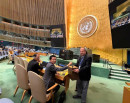
The name is then submitted to the General Assembly. The United Nations General Assembly comprises 193 member states. The General Assembly appoints the new Secretary-General based on the recommendation of the Security Council. In many cases, the appointment is made by consensus without formal voting. The standard term for a Secretary-General is five years, and they can also be selected for a second term.
In straw polls, the 15 member states of the Security Council express one of three positions on each candidate: “encourage,” “discourage,” or “no opinion.” Therefore, member states do not necessarily have to vote strictly for or against a candidate. In the first straw poll held on July 30, Rebeca Grynspan was in the lead. Ten nations encouraged her, one discouraged her, and four expressed no opinion.
In the second straw poll held on August 21, Carolyn Rodrigues-Birkett took the lead. Eight nations encouraged her, three discouraged her, and four expressed no opinion. However, these voting results are not the final election outcome. Their purpose is to assess the standing of candidates and identify whose name can build consensus in the Security Council.
When selecting a Secretary-General at the United Nations, attempts are made to rotate opportunities among different regions of the world. The goal is to ensure that individuals from a single region do not hold the responsibility continuously.
In 1997, the UN General Assembly stated that regional representation and gender equality should be considered when selecting the Secretary-General. However, this is not a binding rule. The Secretary-General is viewed as a global representative of the United Nations. Therefore, making an influential political figure from a superpower like the United States or China the Secretary-General could raise concerns among other nations about the growing dominance of a single power within the UN. As a result, there is a tendency to favor individuals who are not overly aligned with any single superpower and who can understand voices from different regions of the world.
Among the 193 UN member states, countries from Asia, Africa, and Latin America make up a large majority. These nations also expect the leadership of the UN to reflect perspectives from various regions of the world. Nevertheless, candidates from developed nations have also had the opportunity to become Secretary-General. In 2016, António Guterres of Portugal became Secretary-General, despite strong demands at the time for the Secretary-General to come from Eastern Europe.






FACEBOOK COMMENTS