
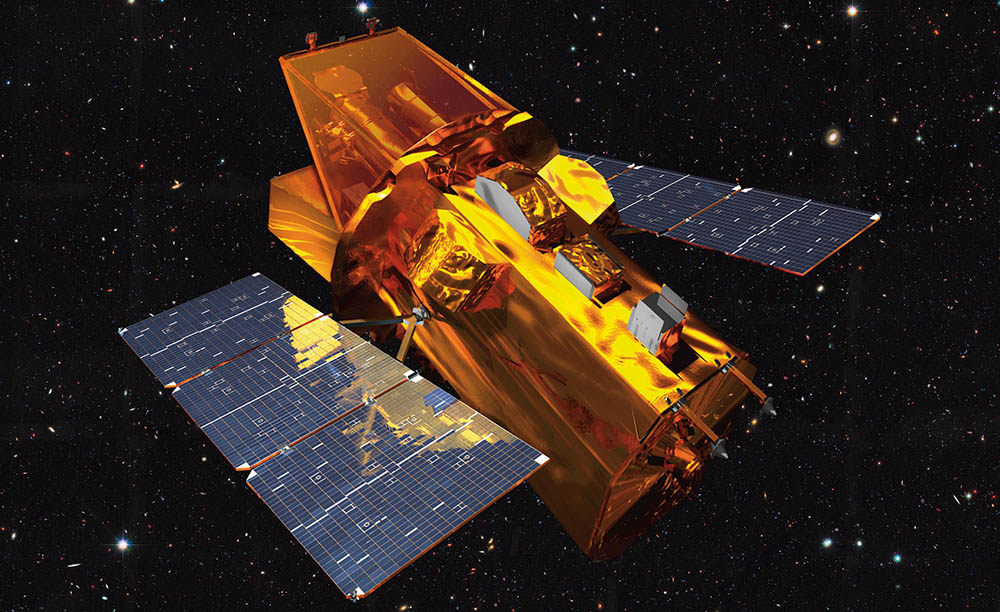
Kathmandu. The journey of NASA’s Swift Space Telescope, which has been studying cosmic mysteries and massive astronomical events such as stellar explosions, is nearing its end. The rescue mission initiated to save the telescope, which has been steadily decaying in Earth’s orbit, has now been officially cancelled.
With this development, Swift—which has contributed to space science for two decades—is set to burn up upon re-entering Earth’s atmosphere later this year. The cancellation comes about a month after the launch of the “Link” spacecraft, sent jointly by NASA and Catalyst Space Technologies for the rescue attempt. According to Catalyst, Link will no longer attempt to dock with Swift or push it into a higher orbit.
The mission was halted due to severe technical issues in the spacecraft’s attitude control system. NASA had paid Catalyst $30 million to safely transport Swift into a higher, sustainable orbit. However, within weeks of its early July launch, the Link spacecraft began tumbling uncontrollably. Although flight controllers managed to stabilize its spin to some extent, persistent issues remained regarding its orientation and positioning in space.
Launched in 2004, Swift spent the last two decades observing high-energy phenomena like gamma-ray bursts and exploding stars. However, intense solar activity caused Swift to lose orbital altitude far faster than projected. By last week, it was orbiting at an altitude of just about 347 kilometers above Earth’s surface. To slow its orbital decay, scientists had already powered down Swift’s scientific instruments earlier this year. NASA Administrator Jared Isaacman stated that while the outcome was not what they hoped for, making the attempt to save Swift was the right decision.
Catalyst noted it will keep Link operational near Swift to test technical capabilities for future rescue missions. Catalyst CEO Gonhee Lee emphasized that this was a high-risk, ambitious project prepared in under a year.
The failure of the Swift rescue mission has raised questions about the future of another iconic NASA instrument, the Hubble Space Telescope. The 36-year-old Hubble is also experiencing orbital decay, further accelerated by recent powerful solar storms. Following the setback with Swift, it remains uncertain whether NASA will pursue a similar large-scale rescue effort to boost Hubble’s orbit and extend its operational lifespan.















FACEBOOK COMMENTS