
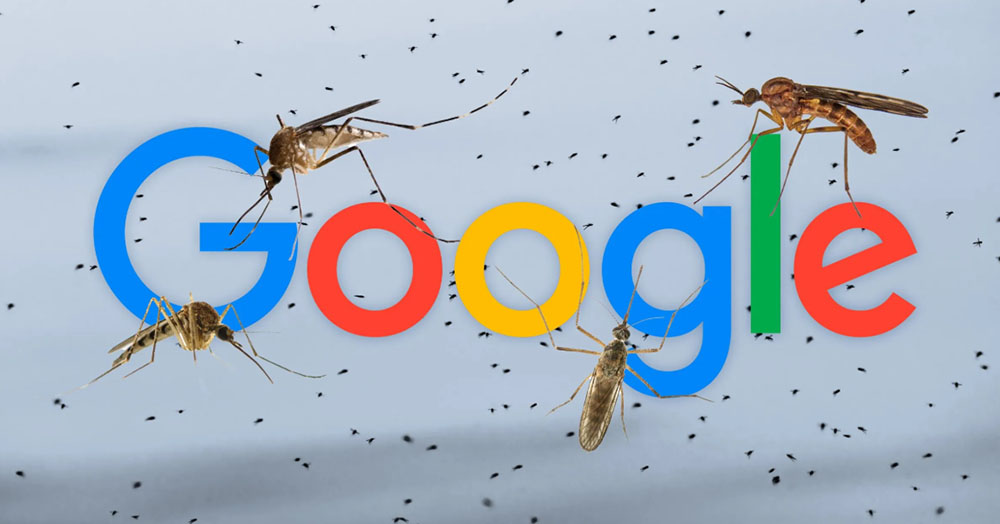
Kathmandu: Google, one of the world’s largest technology companies, has put forward a plan to release about 32 million special types of mosquitoes in the US states of California and Florida. The company has advanced this project with the aim of controlling mosquito-borne diseases. According to a report, the company has sought permission from US government agencies to release these mosquitoes. At first glance, this plan might seem unusual or concerning, but the company’s objective is stated to be controlling dangerous, disease-spreading mosquitoes rather than increasing the overall mosquito population.
Under the project, all the mosquitoes will not be released at once. They will be released in phases over a two-year period so that scientists can study their impact and safety. Additionally, areas with a higher risk of mosquito-borne diseases will be prioritized. These are not ordinary mosquitoes but are special types developed in laboratories. Scientists have engineered them so that they cannot transmit any diseases to humans. When these mosquitoes mate with wild mosquitoes, the resulting eggs fail to develop fully. This is expected to reduce the population of disease-carrying mosquitoes over time.
Before implementing the plan, however, the company must obtain final approval from the US government. It is reported that government officials will make the final decision only after a detailed study of safety data and potential environmental impacts. Meanwhile, scientists have recently been expressing concern over the changing behavior of mosquitoes. A recent study published in the Journal of Experimental Biology shows that mosquitoes are becoming more adaptable than before. According to the study, mosquitoes have now learned to recognize the smell coming from mosquito repellents or coils. Due to repeated exposure to such substances, they are becoming less sensitive to their effects.
According to Claudio Lazzari, the head of the study team, mosquitoes do not fly away simply because of chemicals; how their brain perceives the smell also plays a role. According to her, mosquitoes are now gradually learning to get used to such smells, which has made traditional control measures challenging.









FACEBOOK COMMENTS