
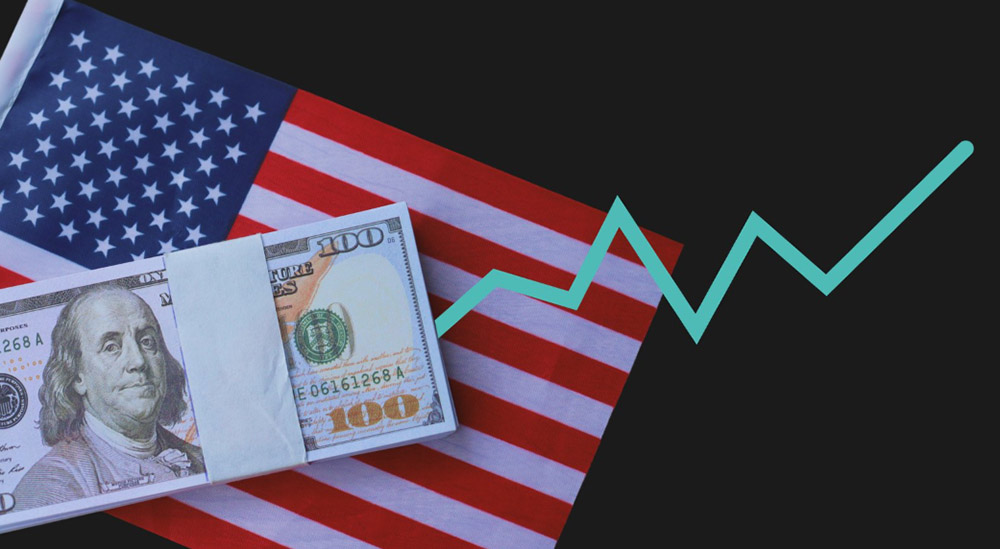
Kathmandu- Official data has shown that the U.S. economy grew at a slower-than-expected pace during the three months from April to June. According to the U.S. Department of Commerce, the economy expanded at an annualized rate of just 1.5 percent in the second quarter. This marks a slowdown from the 2.1 percent growth rate recorded in the first three months of the year. Analysts had previously projected an economic growth rate of around 2 percent for this period.
This data comes at a time when the world’s largest economy is navigating economic headwinds stemming from the war with Iran and the pressure of additional import tariffs. It was noted that while consumer spending picked up, overall economic growth remained sluggish due to declines in government spending, investment, and exports.
Consumer spending, which accounts for more than two-thirds of the U.S. economy, surged significantly. In the second quarter, consumer spending rose by 3.2 percent, compared to a mere 0.5 percent growth in the first three months of the year. Despite annual inflation reaching 3.5 percent, surveys indicate that American consumers are increasing their spending on light cargo vehicles, furniture, and prescription medications.
Michael Pearce, Lead U.S. Economist at Oxford Economics, stated that the growth slowdown does not fully capture the underlying strength of the U.S. economy. According to him, there are signs that investment is beginning to pick up again even in sectors not directly linked to artificial intelligence. However, while AI-related investments remain a key driving force, their contribution to overall economic growth was limited due to a surge in imports of necessary microelectronic chips.
Meanwhile, the U.S. Federal Reserve decided to keep interest rates unchanged for the fifth consecutive time. Federal Reserve Chair Kevin Warsh remarked that there is no magic formula to control inflation. In the United States, inflation has remained above the central bank’s 2 percent target for more than five years.
The central bank stated that despite uncertainties stemming from the Middle East conflict, the U.S. economy continues to expand at a solid pace. Due to the conflict, crude oil prices have risen once again. In international markets, crude oil prices reached approximately $90 per barrel. This has also impacted U.S. gasoline prices, pushing average retail petrol prices above $4 per gallon.
Bradley Saunders, North American Economist at Capital Economics, noted that although economic growth has slowed somewhat in recent months, the overall U.S. economy remains in a healthy state. According to him, while rising fuel prices have placed pressure on household budgets, American consumers have largely absorbed the impact.
Meanwhile, another set of figures released showed that the Personal Consumption Expenditures (PCE) price index—the Federal Reserve’s preferred metric for measuring inflation—reached 3.7 percent.












FACEBOOK COMMENTS