
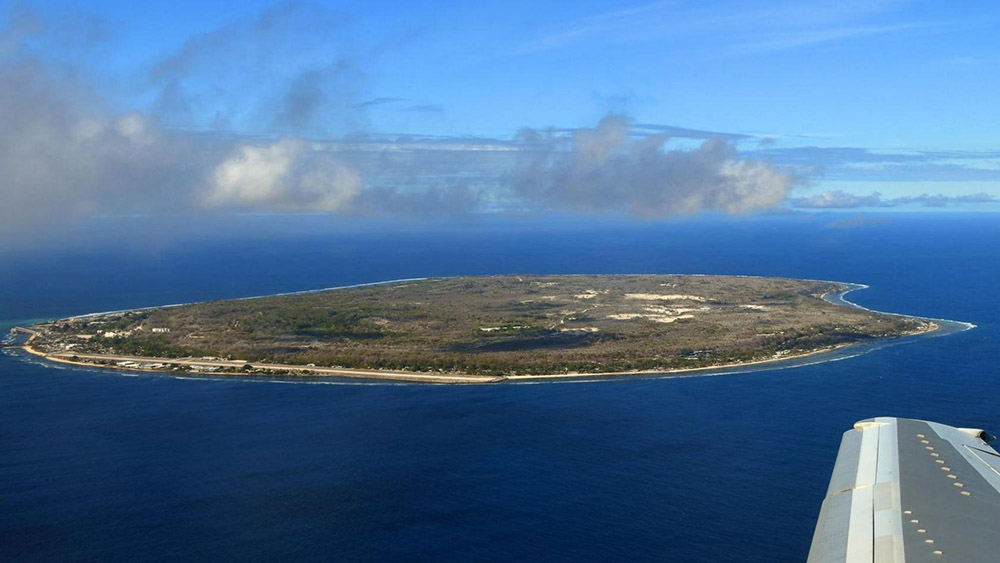
Kathmandu — Nauru, an island nation located in the Pacific Ocean and the world’s third smallest country, has officially changed its name to the ‘Republic of Naoero’. The United Nations has also updated its official records to reflect this new title. With a population of around 12,000, the island nation stated that ‘Naoero’ is its indigenous name, whereas ‘Nauru’ was a foreign pronunciation and usage. The government adopted its native name to establish its language, culture, and historical identity internationally, making Naoero the eighth country in the 21st century to change its name, following similar moves by Swaziland (to Eswatini) in 2018 and Turkey (to Türkiye) in 2022.
Until the late 19th century, Naoero was inhabited by 12 local tribes without a modern government or military, relying mainly on fishing, coconut farming, and marine resources. However, the arrival of European traders in the 1870s introduced alcohol and firearms, disrupting social stability. A deadly feud during a wedding ceremony in 1878 triggered a decade-long tribal civil war. Germany intervened in 1888, taking control of the island, disarming the tribes, and ending the conflict. Australian forces later captured Naoero in 1914 during World War I, and after decades of foreign administration under Australia, the nation gained full independence on January 31, 1968.
The country’s economic trajectory was heavily shaped by the discovery of vast phosphate deposits by Australian geologist Albert Fuller Ellis in 1900, leading to commercial mining from 1906. Following independence, the government took control of the phosphate industry, turning Naoero into one of the world’s wealthiest nations per capita during the 1970s. This boom funded free public services such as education and healthcare, as well as extensive overseas property investments. However, decades of aggressive mining depleted the phosphate reserves, wiping out the country’s primary revenue source and leaving many foreign investments in losses, leading to a severe financial crisis since the 1990s.
Today, Naoero faces severe environmental challenges alongside its economic difficulties. Sea levels around the island have been rising at an average rate of 5 millimeters annually since 1993—higher than the global average—with scientists warning of a 20 to 57 centimeter rise by the end of the century. Furthermore, phosphate mining has rendered nearly 80 percent of the interior land barren, forcing most citizens to live along coastal areas vulnerable to erosion and high tides. To tackle these issues, the government has launched an investment citizenship scheme to fund infrastructure, climate change adaptation projects, and the relocation of communities to safer, higher ground. According to the government, adopting the native name ‘Naoero’ symbolizes a commitment to re-establishing its national identity rooted in history and culture above geographical limitations.














FACEBOOK COMMENTS