
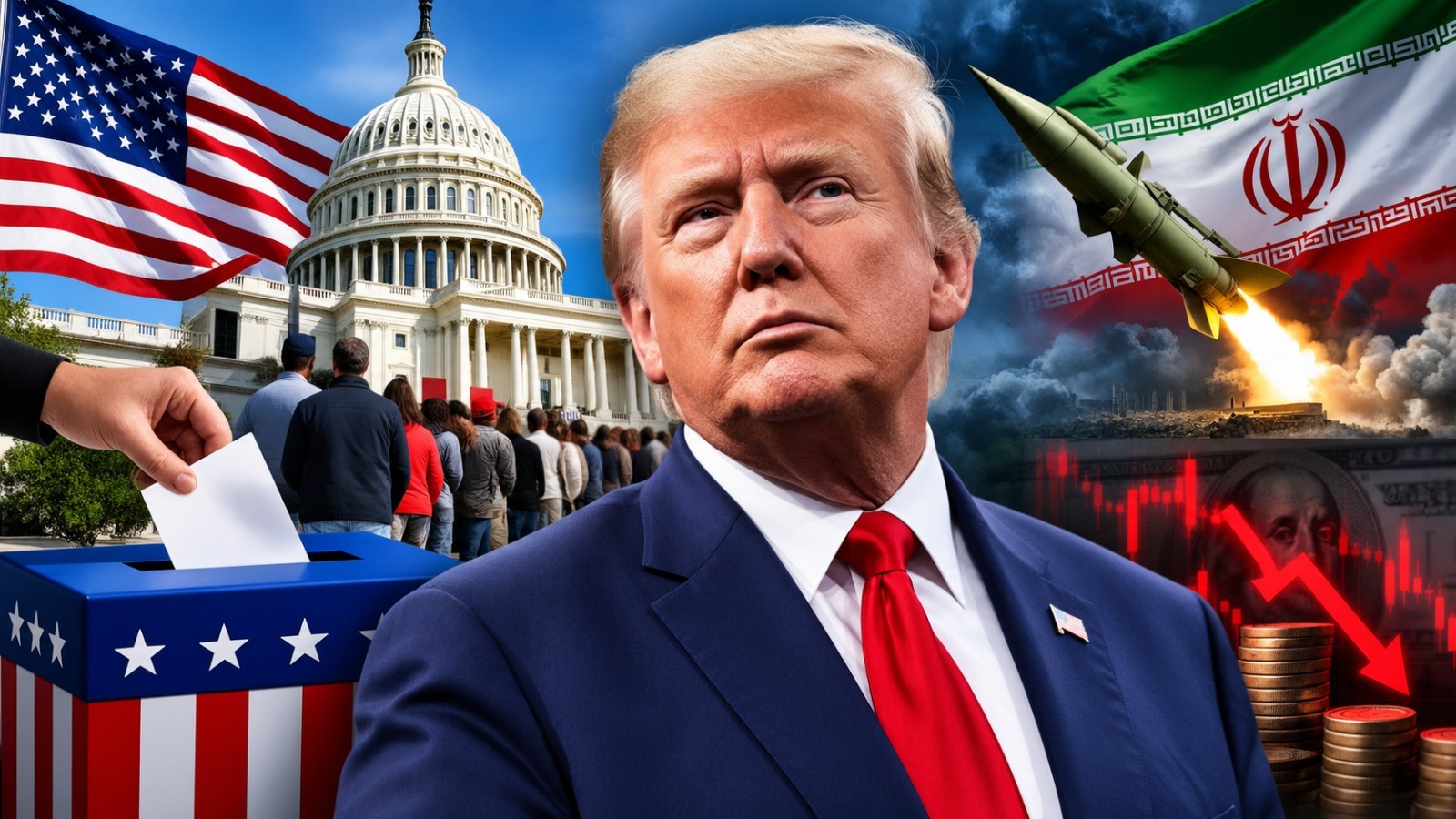
Kathmandu. With the US midterm elections just a month away, global attention is increasingly focused on how the vote could shape President Donald Trump’s second-term political direction and the balance of power in Washington.
The November 3, 2026, elections will determine all 435 seats in the House of Representatives and 34 of the Senate’s 100 seats.
The president is not directly elected in a midterm election. However, the balance of power in Congress can significantly affect the administration’s ability to advance legislation, approve budgets, secure key appointments and face congressional oversight during the remaining two years of the presidential term.
Republicans currently hold majorities in both chambers. The Senate stands at 53 Republicans, 45 Democrats and two independents, with both independents caucusing with Democrats.
The US Congress consists of two chambers—the House of Representatives and the Senate. The structure was created as part of the constitutional compromise between states with larger and smaller populations. Representation in the House is based largely on population. All 435 House seats are contested every two years.
The Senate, meanwhile, has 100 members, with two senators representing each state. Senators serve six-year terms, and elections are staggered so that roughly one-third of the seats are contested every two years.
In 2026, the regularly scheduled elections are being held for Senate Class 2 seats.
Both chambers play a central role in the US lawmaking process. In general, legislation must pass both the House and Senate before being sent to the president.
The House has the exclusive power to initiate revenue bills and bring articles of impeachment against federal officials. In the event that no presidential candidate receives a majority of Electoral College votes, the House can also choose the president under the constitutional procedure.
The Senate, meanwhile, has the power to provide advice and consent on major presidential appointments, including Cabinet officials, ambassadors and federal judges. It also plays the key role in approving international treaties.
While the House can impeach a federal official, the Senate conducts the impeachment trial and determines whether the official should be convicted.
The 2026 midterm election is being closely watched as an important political test for the Trump administration after its first two years in office. Recent polling and political reporting have highlighted concerns over Trump’s approval ratings, economic conditions and the political impact of the war with Iran.
Reuters reported on September 30 that Trump acknowledged he had not effectively communicated what he considers his administration’s economic achievements to the public. The report also noted that high gasoline prices and the Iran war have weighed on consumer confidence. Economic issues—including inflation, household costs and fuel prices—are therefore expected to remain central to the election debate.
The ongoing US-Iran war has emerged as another major issue ahead of the midterms. The conflict has placed pressure on global energy markets and contributed to higher fuel prices. Reuters reported that the war has become a political issue ahead of the November election, with Democrats seeking to put Republicans under pressure over the conflict and some Republicans distancing themselves from the administration’s position.
The situation around the Strait of Hormuz has also added uncertainty to global energy supplies. As a result, the duration of the conflict, fuel prices and the cost of the war are likely to remain part of the political debate ahead of the election.
Trump’s approval ratings have become an important part of the midterm political discussion. Economic conditions, the cost of living and the Iran war are among the issues being cited in recent reporting about voter dissatisfaction.
At the same time, polls measure public opinion at a particular moment and should not be treated as a definitive indication of the eventual election result.
Although Trump’s name will not appear on the midterm ballot as a presidential candidate, US midterm elections are commonly viewed through the lens of the incumbent president’s performance because voters are deciding which party will control Congress.
Trump has therefore intensified his campaign activities ahead of the November 3 vote. Reuters reported on October 1 that he had launched an extensive campaign effort aimed at supporting Republican candidates across several states.
A change in the majority in either the House or Senate could alter the political relationship between Congress and the White House.
If the opposition party gains control of the House, committee leadership could change and congressional investigations and oversight of the executive branch could increase.
The House also plays a major role in budget and appropriations legislation, meaning the administration could face greater political negotiation over its spending priorities.
Control of the Senate is particularly important for presidential nominations and other Senate procedures. Changes in Senate control could therefore affect the administration’s ability to advance judicial, diplomatic and senior government appointments.
On November 3, American voters will elect all 435 members of the House and vote in the scheduled Senate contests. Republicans currently hold majorities in both chambers.
The election debate is focused on issues including inflation, employment, fuel prices, the economy, immigration, the Iran war and the overall performance of the Trump administration.
Whatever the final balance of power in Congress, the outcome will shape the relationship between the White House and Congress over the remainder of Trump’s second term, particularly on legislation, budgets, appointments and executive oversight.
The 2026 midterm election is therefore not simply a contest for congressional seats. It is also an important constitutional and political turning point that could influence how the Trump administration governs during the remaining years of its second term.








FACEBOOK COMMENTS